What do the Colosseum’s missing southern corridors reveal?
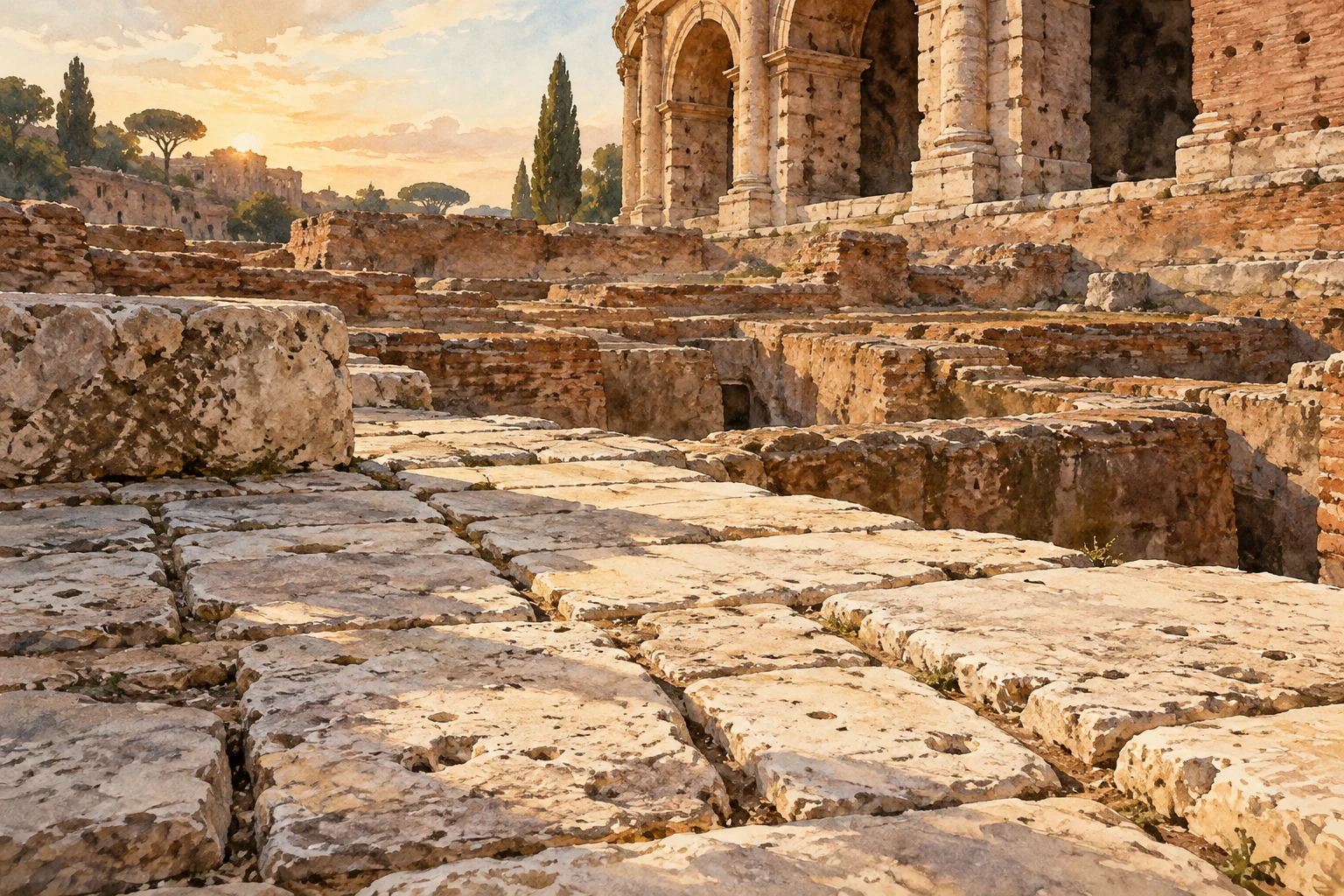
The Colosseum’s southern side can teach you something that its familiar high facade cannot: how to read a building when much of it has disappeared. The missing outer corridors survive through their footprint, archaeological traces and a modern treatment of the ground. Looking down becomes as useful as looking up. A good visit distinguishes those different kinds of evidence instead of assuming that every pale stone you see belongs to the Roman amphitheatre.
This is a focused observation stop, not a promise of additional ticketed access. Follow the currently permitted route and barriers. If you are building a wider introduction, begin with our guide to the Colosseum’s changing history, then use this southern-side exercise to give that long story one concrete example.
Find the missing volume before searching for details
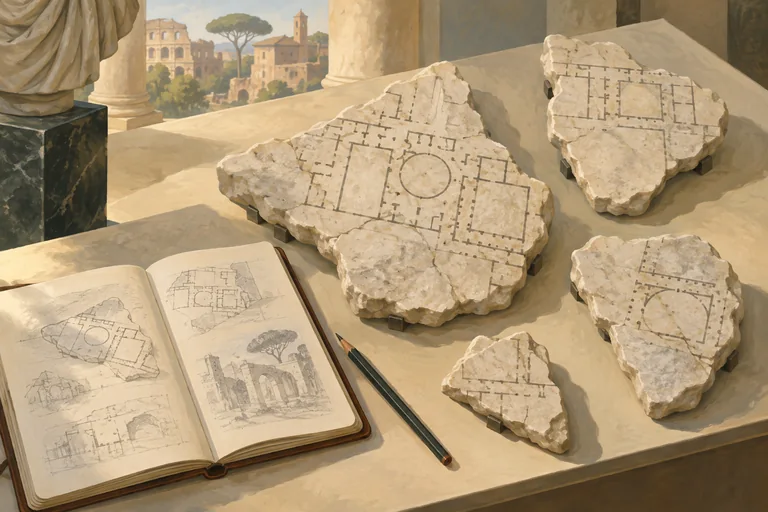
The Park’s explanation of the southern ambulatories describes two outer rings of corridors lost on the side facing the Celio. Its account of the project, undertaken between October 2022 and March 2026, explains how new paving and raised outlines help communicate their former position. The surviving northern perimeter and the open southern ground therefore tell different parts of the same architectural story.
Start by finding a safe place to stand where you can compare the visible structure with the ground in front of it. Imagine the problem as a drawing exercise, not an invitation to invent an exact reconstruction. Which part is standing? Which part is indicated only in plan? Where does the modern walking surface guide your eye? You can answer those questions without knowing every architectural term.
Learn three useful categories: remain, impression and interpretation
A surviving block is material from an earlier building phase. An impression records where something once sat. A modern outline is a way of explaining evidence to visitors. These categories can appear together, but they do different work. Being able to name the distinction is more useful than confidently assigning a date to every stone from its color.
The Park’s floor-conservation account describes thick travertine paving removed through later stone reuse, with rectangular traces left in its underlying mortar. It also explains the work required to stabilize fragile surfaces. The absence of a block can therefore preserve information, while an apparently modest patch of mortar can deserve as much care as a carved architectural feature.
Try writing three short notes: “I can see,” “the official explanation says,” and “I still wonder.” This separates observation from interpretation. A shape you cannot identify belongs in the third column, not in a confident story invented on the spot. Children can do the same exercise with quick sketches, adding to the ideas in our family looking guide.
Ask why some archaeology is covered again
Excavation does not automatically mean leaving everything exposed. The Park’s excavation diaries place the work within a project to recover understanding of the original monument while responding to the condition of what was found. The southern-corridor interpretation explains that delicate preparation layers were assessed and protected, with only a limited portion left visible.
That choice is a useful challenge to the idea that more visible ruin always makes a better visit. Ask what a surface was designed to withstand. Something originally protected beneath a heavy floor may fare poorly in rain, sun and foot traffic. Conservation can make an archaeological story more legible while deliberately keeping some of its evidence out of view. A barrier or protective layer may be doing important work rather than withholding a secret attraction.
Look for a route through an audience building
Once the footprint makes sense, think about movement. Corridors are places where people travel between destinations. Follow a permitted modern path with your eyes and compare the idea of moving around a curve with moving toward the center. Do not treat today’s route as an exact replay of an ancient spectator’s journey; its purpose includes modern visitor management and protection.
The exercise pairs well with our arena and underground comparison: the arena focuses attention on performance, while passages encourage questions about circulation and work. For another contrast, Rome Tour Hub’s Centrale Montemartini guide explores how the setting around ancient material changes what you notice.
If you want expert interpretation, compare the actual routes in our ancient Rome history experiences and ask whether the southern exterior forms part of the visit. A general Colosseum title does not guarantee every stop. Leave with one clear distinction between surviving fabric and its modern explanation; that small skill will make the next archaeological site much easier to read.
Sources & further reading
Turn a good read into a great day.
Find a highly rated Roman experience that brings these stories to life.
Explore related experiences →