Colosseum arena or underground: what is the difference?
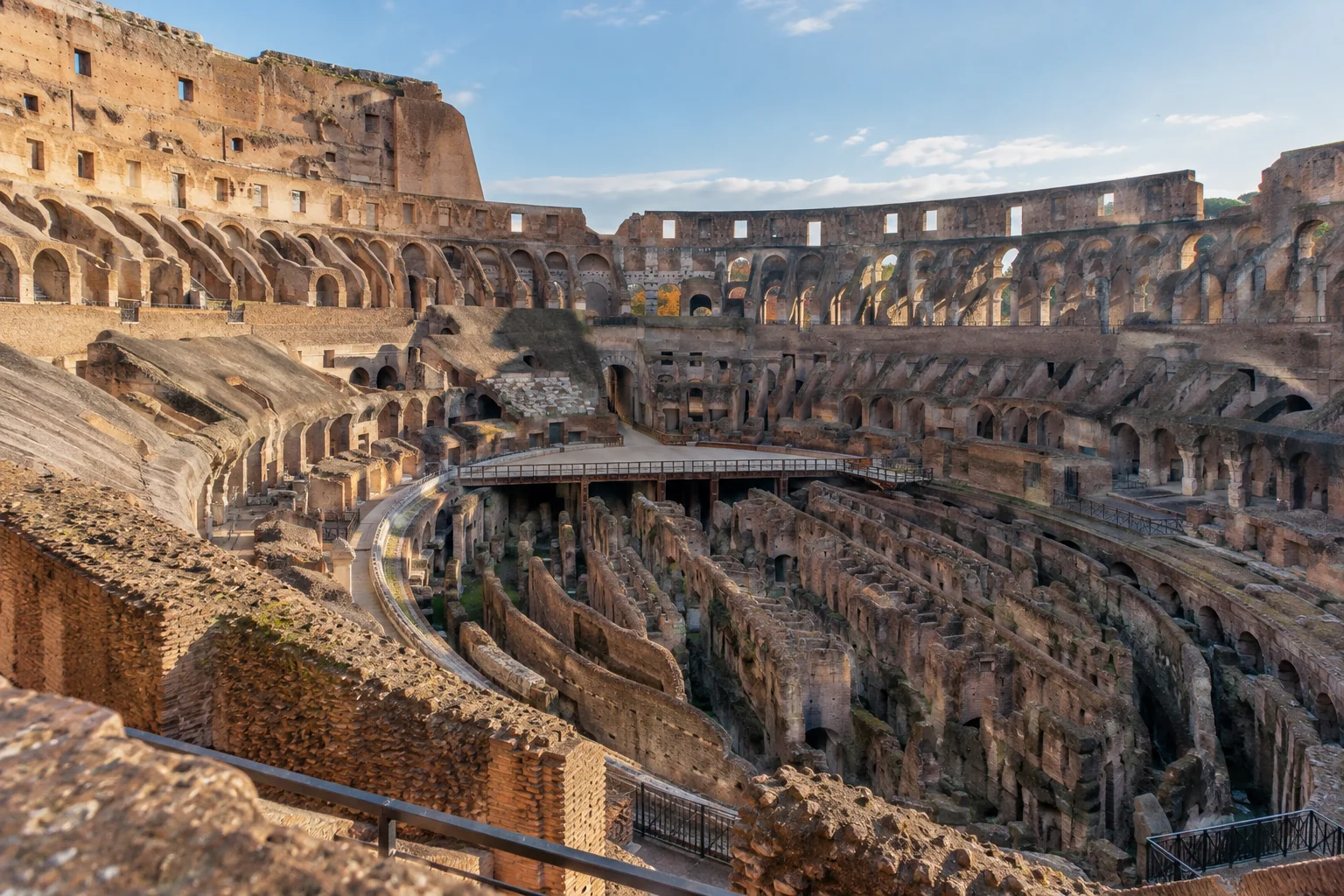
The arena and underground are different parts of the Colosseum experience. Think of the arena as the level where the spectacle took place, and the underground as the working spaces beneath it. One helps you understand the relationship between performer and audience; the other draws your attention toward the organization behind the event. Access should be checked in the specific product you are booking.
That distinction sounds simple, yet it is easy to lose while browsing long product titles. A tour may include one area, both, or neither. It may also include the Forum and Palatine, creating another layer of names. Start with the spaces that interest you, then read the written route carefully. Do not make your choice from the hero photograph alone.
What to look for from the arena perspective
From an arena-level viewpoint, the important relationship is vertical: you below, the audience rising around you. Look at how the surrounding architecture frames the central space. Consider how exposed a person would feel there and how the scale changes when you imagine the seats occupied. The building becomes a setting for public performance rather than simply a ruin to admire.
This perspective can appeal to visitors who learn through space and atmosphere. You do not need extensive background reading to ask where attention would be directed or how the enclosure shapes your response. Our introduction to the building's story adds political context if you want to go further. The aim is understanding, not rehearsing movie scenes as historical evidence.
What the underground encourages you to notice
An underground visit turns the central question toward preparation: how do people, materials, and animals move through a building designed to create a public event? The surviving structures invite that line of inquiry, but careful interpretation matters. A good explanation distinguishes visible evidence from reconstruction and tells you when a mechanism or sequence remains uncertain.
You may find this the more rewarding choice if you enjoy engineering, logistics, or the work that makes a spectacle possible. Ask the guide how the area changed over time and what parts of the route are original fabric, restoration, or modern visitor infrastructure. An ancient building rarely has one unchanging layout across its entire history.
Why ticket names deserve close reading
The park offers different visit products, and access arrangements can evolve. Use the official monuments directory and current ticket information to orient yourself, then rely on the exact inclusions for your chosen date. A broad phrase such as “Colosseum experience” is not enough to establish which restricted areas are included.
Check the duration, language, meeting point, guide arrangements, mobility requirements, and the treatment of the Forum and Palatine. Establish whether the product includes admission or only an accompanying service. If an area is essential to your trip, keep the written confirmation. The guided-versus-independent comparison provides a broader checklist for judging the full experience.
Which should you choose for a first visit?
Choose according to curiosity, not fear of missing the “real” Colosseum. If you want a powerful sense of the central performance space, arena access may fit that aim. If you are drawn to practical systems and the work behind the spectacle, underground access may be more compelling. A standard visit can still offer a rich understanding of the amphitheatre; special access is an addition, not a test of enthusiasm.
Budget and availability also matter. If your preferred access is unavailable, consider whether another experience will satisfy the main reason you want to visit. Avoid spending so much of the day chasing an ideal ticket that you lose the chance to enjoy a perfectly good alternative. Our short-visit guide is useful if time is the real constraint.
Make the final comparison simple
Create a shortlist of two or three products and compare the same fields: included spaces, total duration, total cost, group size, review volume, recent comments, and cancellation policy. Do not compare an admission-only ticket with a long guided tour as though the products were identical. The difference in service should be clear enough to describe in one sentence.
Explore Rome Essentials for experiences that fit your plan, and verify all access details before paying on the booking provider's page. On the day, follow the route instructions and make time to look up as well as down. Whichever perspective you choose, the most useful question is the same: what does this place allow you to understand that a picture could not?
Sources & further reading
Turn a good read into a great day.
Find a highly rated Roman experience that brings these stories to life.
Explore related experiences →