What can the Passage of Commodus tell you about the Colosseum?
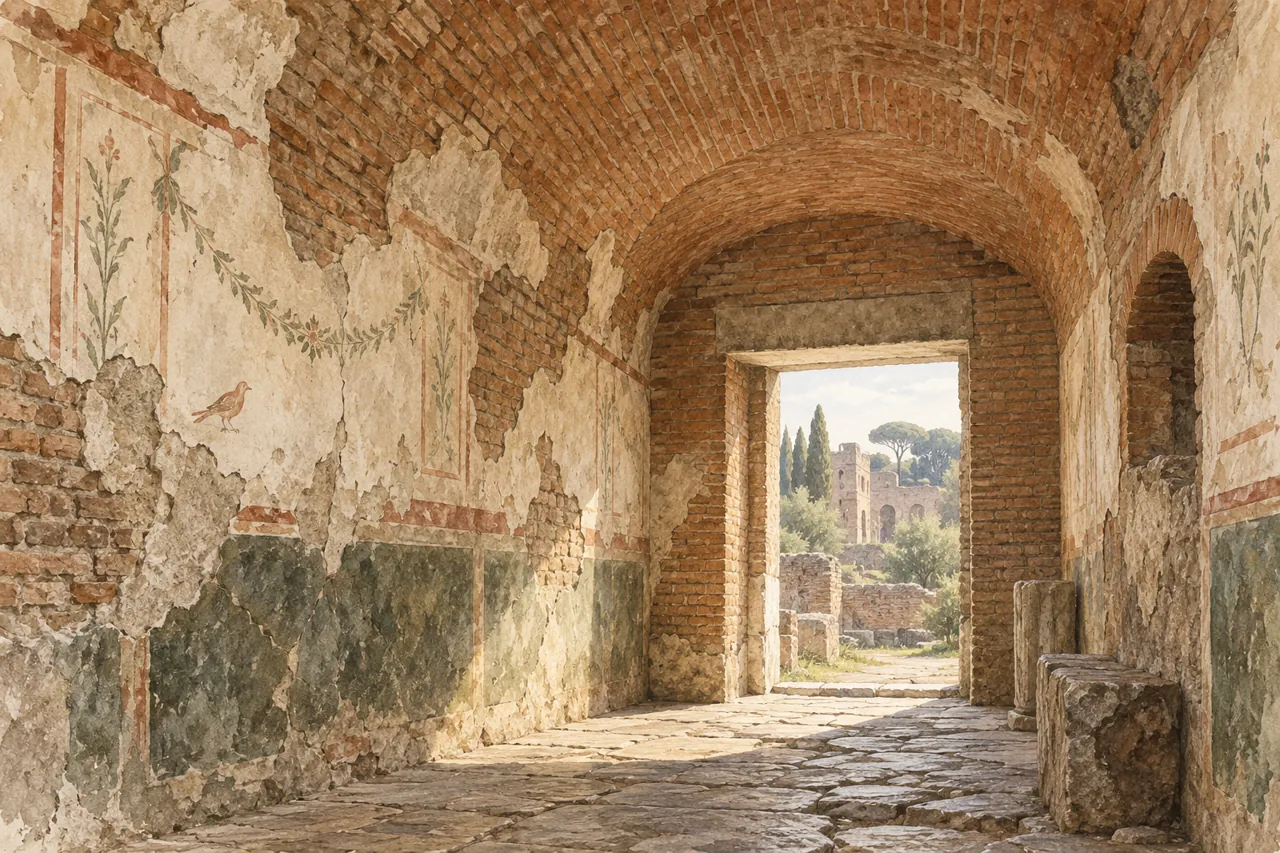
The Passage of Commodus helps you see the Colosseum as a building organized around movement, privilege and changing tastes. Its interest lies in the route itself and in the surfaces that successive interventions left behind. A corridor can reveal something an arena panorama cannot: how particular people reached their places, what they encountered along the way, and how architecture separated one kind of visitor from another.
Approach this as a focused historical visit. You do not need to memorize an imperial family tree before entering. A more useful preparation is to carry three questions: where did this passage lead, how did its decoration change, and which parts of that story can the surviving building actually support?
Start with the route, rather than the dramatic name
The archaeological park describes the so-called Passage of Commodus as a vaulted underground connection between the pulvinar, the gallery reserved for high officials on the southern side, and the exterior. It was added around the turn of the first and second centuries CE, cutting through earlier foundations. Light wells helped illuminate and ventilate it. These details make the passage evidence of an altered building, rather than an unchanged component of the original design.
The name is a starting point for investigation, not permission to turn every stretch of masonry into a scene from an emperor’s biography. Ask a guide to distinguish the conventional name, the archaeological evidence and any historical interpretation. That distinction makes a visit more interesting: uncertainty becomes a useful part of the explanation instead of a gap to fill with an exciting story.
Look for several decorative lives
The park’s restoration account identifies traces of marble fixings from an earlier decorative scheme, later painted plaster with landscape subjects, and stucco decoration associated with Dionysus and Ariadne. At the entrance, niches include scenes connected with the arena. These are different sorts of evidence; they should not be flattened into one imagined original appearance.
Try a simple looking exercise. First notice a material: brick, plaster or a surviving decorative surface. Next notice its position. Is it overhead, at eye level or close to a junction? Finally ask what a person passing through would have been able to see. This sequence keeps your attention on the object in front of you before moving into interpretation.
Resist the temptation to label every pale patch or irregular edge yourself. Conservation can make a complex surface readable without making every phase immediately obvious to an untrained visitor. A good question is, “What shows that this belongs to a different phase?” The answer may be more memorable than another date.
Connect a private route with a public spectacle
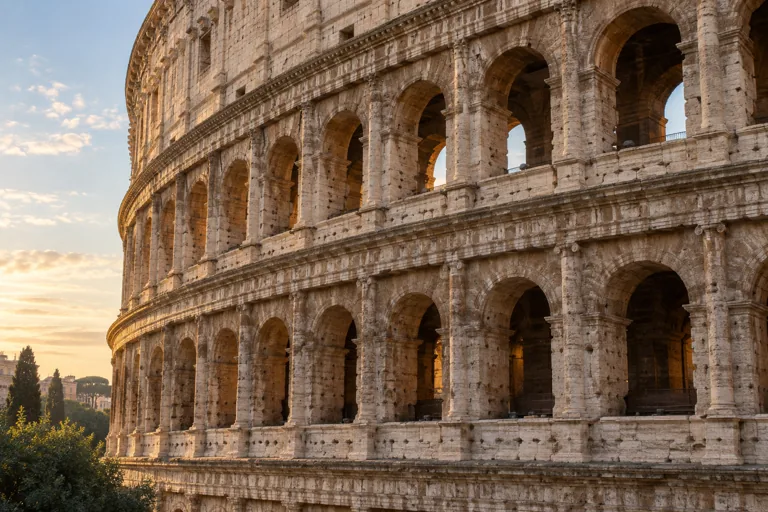
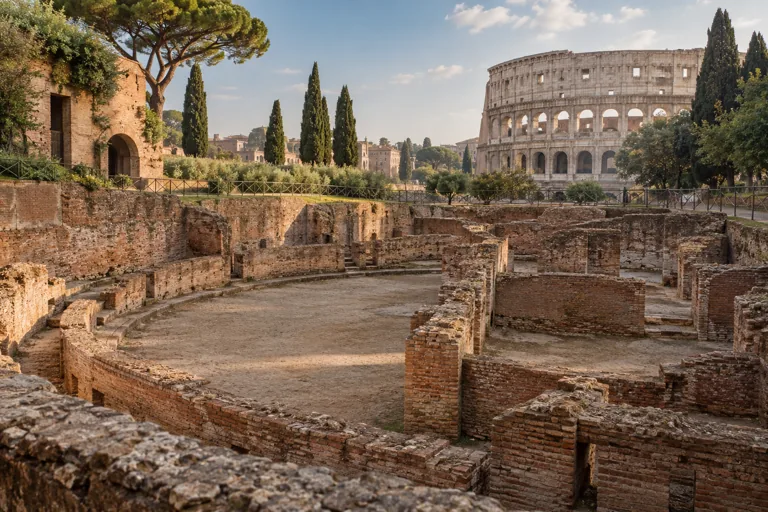
The Colosseum’s first-century Flavian origins and its association with gladiatorial spectacles and animal hunts provide the wider setting. Our history of the Colosseum as a changing public building offers an introduction. The passage adds a smaller-scale question: how did the building manage differences between its users?
You can carry that question into the rest of a visit without assuming that every route had the same function. Compare a constrained corridor with an open view, or an entrance sequence with the moment of reaching a seat. Architecture directs attention as well as feet. Thinking about that relationship can turn an impressive ruin into a more intelligible place.
If you enjoy examining how Rome presented power, continue with a close look at the Arch of Constantine. For a different setting across the city, Rome Tour Hub’s first-visit guide to the Capitoline Museums helps you give sculpture and civic collections the same patient attention.
Check the exact visit you are booking
As checked on 4 October 2026, the park lists a specific Full Experience Passage of Commodus ticket. Consult that official page for the current dates, language, group conditions and purchase arrangements. Do not assume that a general Colosseum ticket or a product described as “underground” includes this particular passage.
Before paying, match the product name and inclusions to your main reason for visiting. Our explanation of arena and underground visits helps separate other commonly confused choices. Browse the Colosseum experience collection with those distinctions in mind, checking each listing rather than relying on its headline alone.
Give this visit room in the day. Arrange a pause afterward to compare what you noticed, especially if you are traveling with people whose interests differ. One person may remember a painted fragment, another the engineering, another the contrast between a privileged route and the great public arena. Those observations are the beginnings of a conversation, not competing answers to a quiz.
Sources & further reading
Turn a good read into a great day.
Find a highly rated Roman experience that brings these stories to life.
Explore related experiences →