The Arch of Constantine: a fifteen-minute lesson in looking
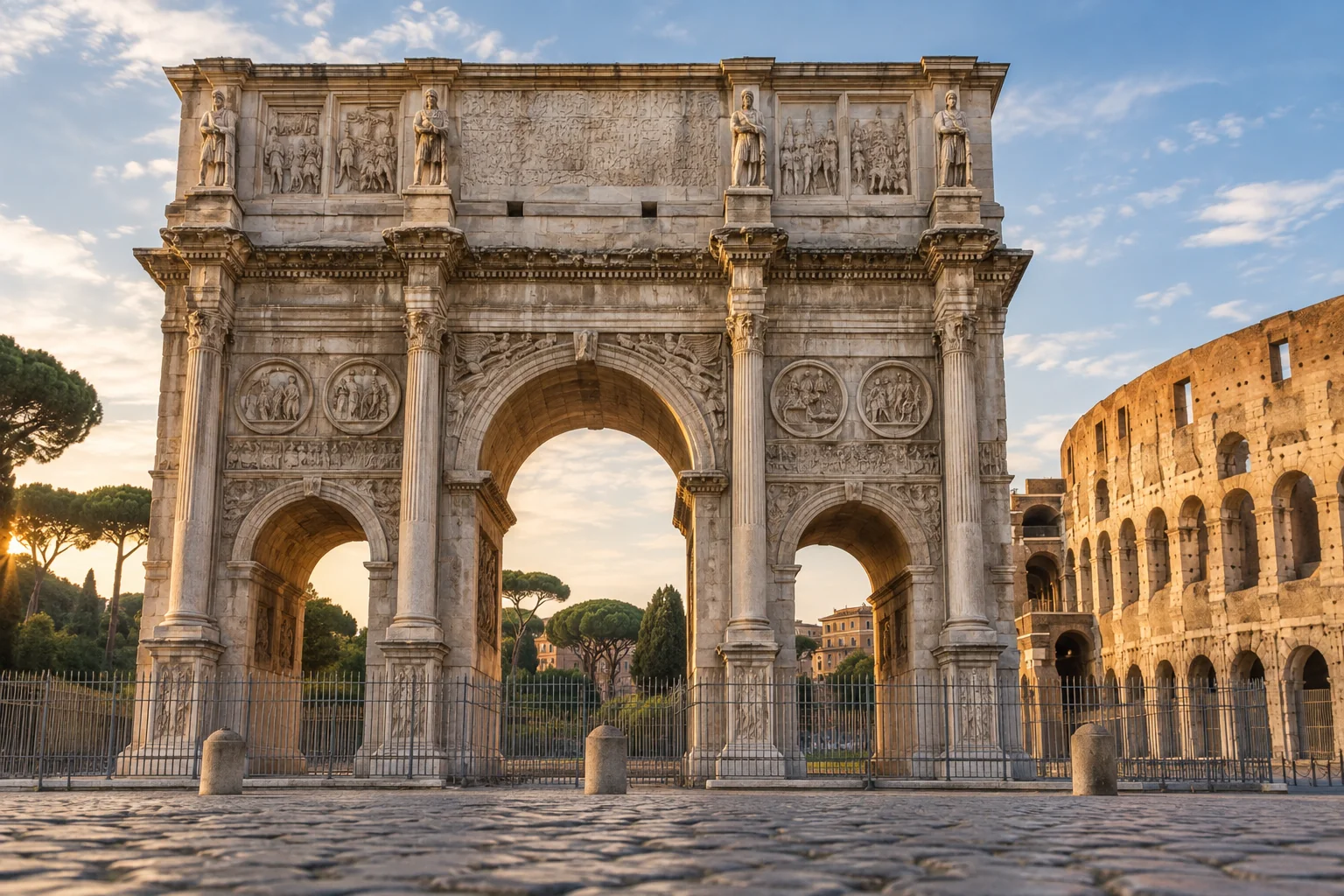
The Arch of Constantine is easy to pass while concentrating on the Colosseum. Give it a deliberate pause instead. You do not need a long visit or a specialist vocabulary to find it interesting. A short sequence of looking, comparing, and asking questions reveals how a monument can make an argument in stone.
Allow roughly fifteen minutes if that suits your route, but treat the time as an invitation rather than a requirement. Pedestrian arrangements and crowd levels vary. Find a safe place outside barriers, avoid blocking movement, and work with the view available. There is no need to reach a particular square of pavement for the exercise to work.
First, take in the whole structure
Stand far enough back to see the overall design. Notice the contrast between the large central passage and the smaller side openings, the vertical emphasis of the columns, and the broad upper section carrying the inscription. Before learning what everything means, consider how the structure organizes your attention. Which feature do you notice first, and where does your eye go next?
Then look at the arch in relation to the Colosseum. The buildings do different visual work: one encloses a vast interior, while the other frames passage and presents decorated surfaces. Comparing neighboring monuments is a useful way to understand architecture without turning your visit into a list of measurements.
Add a little historical context
The park's official account dates the dedication to 315 CE and connects the arch with Constantine's victory over Maxentius. It also identifies reliefs reused from monuments associated with Trajan, Hadrian, and Marcus Aurelius, alongside Constantinian work. You are looking at a carefully arranged combination of material from different imperial moments.
The reused pieces invite a productive question: what does an emperor gain by connecting his monument with earlier rulers? The answer involves interpretation, but the basic observation is tangible. This is not simply a heap of old decoration. The pieces appear within a new public composition, and that setting changes the way they are read.
Compare two sculpted areas
Choose two groups of reliefs you can see comfortably. You do not have to identify their exact dates to begin. Compare the size of figures, the density of the scene, the treatment of bodies, and the way people face one another. A guide or official illustrated reference can help you understand those differences without pretending that every change equals artistic improvement or decline.
Avoid a contest over which section is “better.” Different visual choices can serve different purposes. A scene may emphasize hierarchy, ceremony, narrative, or recognizable authority. Ask what the arrangement helps a viewer understand. This turns looking into analysis while leaving room for the pleasure of the carving itself.
Read a monument as a message
An honorary arch is a public statement. Think about the relationship between inscription, images, and scale. What can a person understand from a distance? What demands closer attention or prior knowledge? Modern public communication faces similar choices, although the historical circumstances are very different. That comparison can help you notice how carefully attention is managed.
Our Colosseum history introduction asks related questions about architecture and power. The two monuments make a useful pair: one directs a crowd toward a spectacle, while the other offers a concentrated statement in a prominent location. Their proximity helps you explore a theme without spending the day crossing the city.
Turn a quick stop into a memorable one
Before leaving, choose one detail to remember. It might be the difference between two reliefs, the scale of the central opening, or the way the inscription sits above everything else. Explain that detail to your companion in a sentence. If traveling alone, write it down. A small act of description helps separate this stop from the blur of famous sights.
Continue with our two-hour area plan, or compare short guided experiences if you want someone to develop the interpretation. Do not assume a Colosseum tour automatically includes a detailed discussion of the arch; check the itinerary. Sometimes the most rewarding addition to a major attraction is simply choosing to look properly at what is already beside it.
Sources & further reading
Turn a good read into a great day.
Find a highly rated Roman experience that brings these stories to life.
Explore related experiences →