A short visit to Trajan’s Markets: what to notice first

Trajan’s Markets rewards a visit built around a few questions. How does this building fit the slope? What happens when a fragment of decoration is placed beside an explanation of the building it once belonged to? Which parts of the complex come from later uses? You can leave with a coherent understanding without trying to memorize every emperor or inspect every room.
For a first visit with limited energy, choose architecture as your main thread and let the museum objects support it. This is an editorial approach, not an official shortened route or a promise about how quickly every visitor can complete the site. Use the current museum map and staff advice to adapt it to open areas, access needs and your available time.
Read the Great Hall as a working structure
The museum’s description of the Great Hall explains how its central space relates to adjoining rooms, upper corridors and a system of cross vaults. It also identifies alterations to entrances and stairs. That combination is useful: the hall is impressive in its own right, but its routes have changed. Do not assume the doorway you use today was the original main entrance.
Stand still for a moment and follow one line from support to arch to roof. You do not need engineering vocabulary to notice how different parts connect. Then look toward an adjoining opening and ask what it allows you to see. This exercise works particularly well after reading our introduction to the Colosseum’s changing building, because it encourages the same attention to structure without treating the two monuments as interchangeable.
Let one fragment bring a forum into focus
The official route through the museum rooms describes an introduction to the Imperial Fora and displays connecting surviving architectural and sculptural material with particular complexes. It also notes the use of copies and loans. Read the label closely: an original fragment, a cast and a reconstruction can all help explain a place, but they answer different questions.
Choose one object that you would otherwise have passed quickly. Work out its material, scale and stated origin. Ask where it would have been positioned relative to a human body: above a doorway, along a wall, or as part of something much larger. If a diagram supplies the answer, compare it with the object rather than simply glancing at both in succession.
Be curious about the name “Markets”
The museum places quotation marks around “Markets” in its historical overview, which also acknowledges uncertainty in the surviving ancient evidence for the complex’s origins. That is a useful reminder to avoid imagining every room as the equivalent of a modern shop. A familiar name can make a place approachable while still leaving important historical questions open.
Rather than looking for a modern shopping centre in ancient brickwork, ask what a particular space could accommodate and what evidence supports the interpretation on its label. It is perfectly reasonable to leave with one unanswered question. Archaeology is often more interesting when it shows how a conclusion was reached than when it supplies an effortless story.
Recognize the later building too
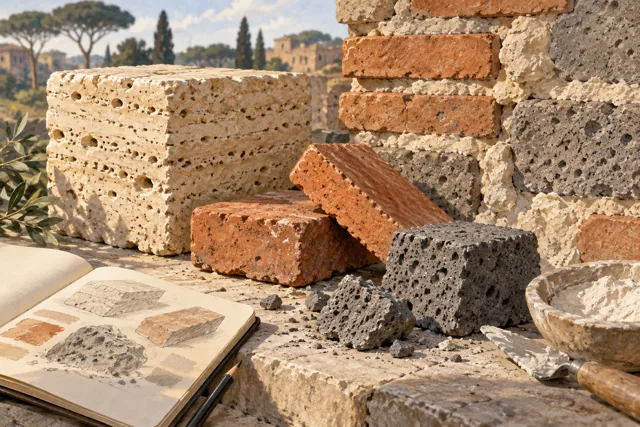
The museum’s medieval history describes the complex’s transformation into a fortified setting and the role of the Torre delle Milizie. Keep that later chapter in view when you notice changes in brickwork or a wall that seems to interrupt another arrangement. You should not date a repair by color alone, but you can identify a useful question to ask.
Our guide to the Forma Urbis makes a related point about incomplete evidence: fragments become informative through comparison and context. Here, the building itself is part of that evidence. Draw two simple outlines of an opening if it helps you look; accuracy matters less than taking time to observe.
Finish with one connection, not three more bookings
Before leaving, decide which idea you want to carry into the city: the scale of an imperial forum, the construction of a vault, or the reuse of a large complex. Our Colosseum-to-Capitoline walk can provide wider orientation, but adding another full museum is optional. A pause may help the visit settle more effectively.
For a guided archaeological day, compare the ancient Rome experience collection and check that the named monument is actually included. If you prefer to change subjects afterward, Rome Tour Hub’s Centrale Montemartini guide offers a different conversation between old objects and a reused building, suited to a separate outing.
Sources & further reading
Turn a good read into a great day.
Find a highly rated Roman experience that brings these stories to life.
Explore related experiences →