What can the Palatine Museum add to a walk through Rome’s ruins?

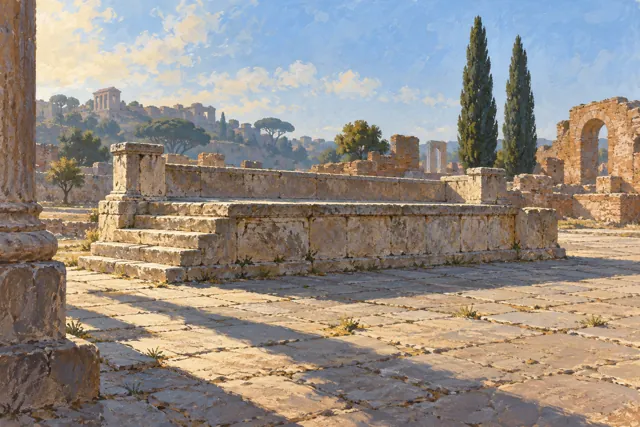
The Palatine can leave a first-time visitor with a wonderfully large question: how did people actually inhabit all this space? Walls establish scale, but smaller finds can supply a different kind of attention. The Palatine Museum offers a chance to move between those scales, looking at objects and then returning to the hill with better questions. Think of it as part of your archaeological walk, rather than a separate collection to hurry through after the views.
Start with the current access notice
When checked on 14 October 2026, the archaeological park’s museum page said that maintenance restricted visits to the ground floor. Its general description also discusses the upper floor, so a mention on the website does not mean that a room is currently open. Check the notice and the precise ticket inclusions before booking. Build your visit around the available route, without promising yourself a particular upstairs masterpiece.
The ground-floor story follows the hill from Rome’s origins toward the emergence of the Principate. The museum itself occupies a former nineteenth-century convent above remains of Domitian’s palace. Those two facts make a useful starting exercise: distinguish the period an object represents from the date of the room displaying it. Even a museum building belongs to the changing history of the site.
Give one fragment a full minute
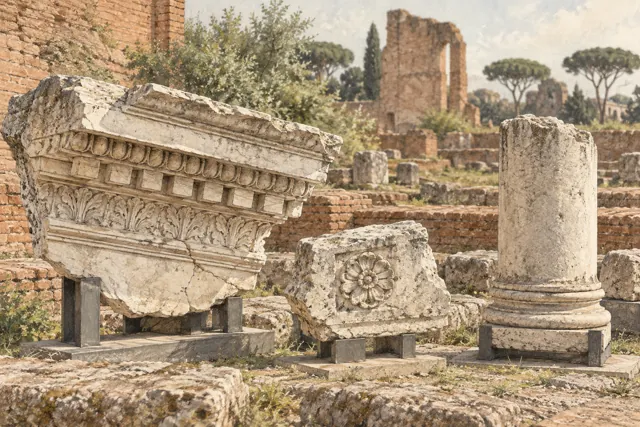
Pick an object that looks modest rather than immediately spectacular. Before reading its label, notice its material, thickness, surviving edges and pattern. Which surfaces seem finished? Which look broken? Is there a repeated motif that suggests it once belonged to something larger? You are not trying to identify it from intuition alone. You are preparing a question that the label may answer.
Then read the identification, date and findspot separately. A date tells you when an object was made or used; a findspot tells you where it was recovered. Those are different pieces of information. If the label leaves the original setting uncertain, keep that uncertainty. It is more interesting than assigning a decorative fragment to an imaginary emperor’s bedroom. Our guide to Roman building materials offers a useful vocabulary for this sort of looking.
Separate objects, models and interpretation
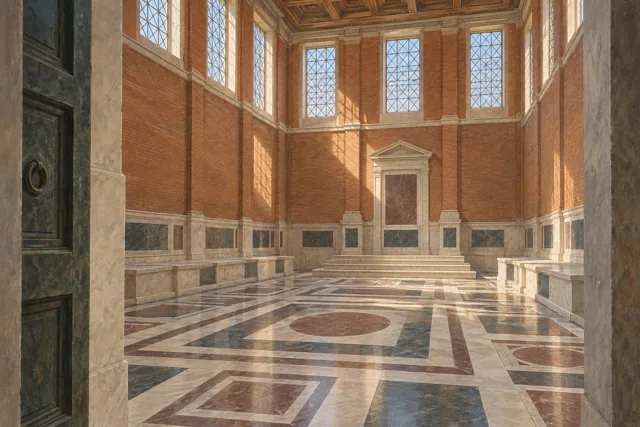
The park’s online collection includes sculpture, architectural decoration and a model associated with the early settlement traditionally linked to Romulus. A model is a helpful explanation, but it is not an excavated miniature village. Ask which parts summarize surviving evidence and which complete a proposed appearance. The same distinction applies to a drawing of a restored room or a digital view of a vanished building.
Try describing an exhibit in two sentences. The first should state what you can observe: a shaped piece of stone, a surface pattern, a surviving join. The second can describe the interpretation supplied by the museum. This tiny habit makes archaeological reading much clearer. You can use it again in the House of the Vestals, where surviving remains and historical explanation must also be held together carefully.
Carry a question back outside
Before leaving, choose one thing to look for on the hill: the relationship between a decorated surface and its supporting structure, the scale of a doorway, or the way rooms connect. There is no need to match every museum object to a visible ruin. Instead, let the indoor visit sharpen your attention to the spaces outdoors. Read our Palatine Hill introduction if you would like a broader framework before making those smaller observations.
A sketch can help more than a long list of photographs. Draw a simple outline of one fragment and add three words about its surface. Later, compare it with an outdoor wall or pavement. The comparison does not prove that they were once connected, but it helps you remember what each material can do. Children can try the same exercise with shapes and colors, without needing to memorize imperial names.
Fit the museum into a comfortable day
Allow room for the climb, the museum and a pause, and ask staff about the route available that day if stairs or slopes affect your plans. When comparing archaeological experiences, read the itinerary closely: admission to a wider area does not establish that every indoor site is included or open. For a later collection beyond the park, Rome Tour Hub’s Capitoline Museums guide offers another way to practice looking closely at objects. Keep that as another visit, not a reason to rush this one.
Sources & further reading
Turn a good read into a great day.
Find a highly rated Roman experience that brings these stories to life.
Explore related experiences →