Is Palatine Hill worth visiting on your first trip to Rome?
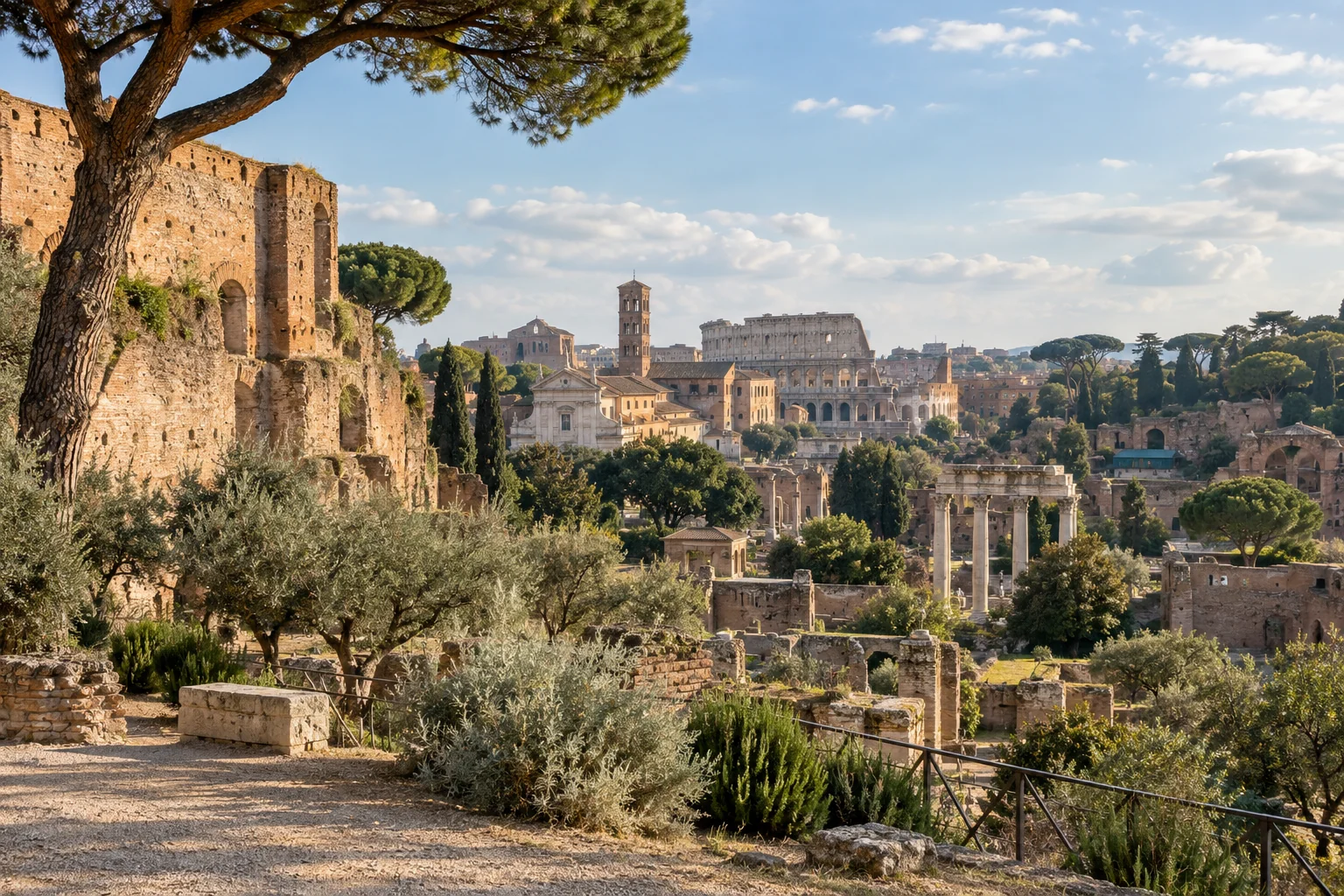
Palatine Hill is worth considering if you enjoy broad views, the remains of large residences, and the connection between a city's landscape and its power. It can add an excellent second perspective to a Forum visit. It is less rewarding when squeezed into the last exhausted minutes of an already ambitious day. Give it time and attention, or make a conscious decision to keep your route shorter.
There is no universal answer because travelers want different things from ruins. Some people enjoy walking through a fragmentary plan and imagining how spaces connected. Others prefer an intact interior with objects and explanations close at hand. Understanding that preference is a better guide than treating every major attraction as compulsory.
What makes this hill interesting?
The official Palatine overview describes early settlement remains, aristocratic houses, and later imperial residences on the hill. It also explains the connection between the name Palatium and later words for a royal palace. In a small set of facts, you have the outline of a remarkable change: an inhabited hill becomes closely associated with imperial life.
Use that history as a starting point for looking, rather than as a script to recite. Ask how elevation changes the relationship between residence and city. What can be seen from here? What kinds of spaces feel public, ceremonial, enclosed, or withdrawn? Your impression is not a substitute for archaeological evidence, but it can make the explanation easier to understand.
Look at connections, not just impressive walls
Large palace remains can be difficult to interpret because their scale exceeds a normal domestic reference point. Begin with an identifiable room or courtyard on an official plan. Then look for thresholds and neighboring spaces. Consider how a visitor might have been led from one place to another and how movement could create a sense of importance.
When a guide identifies a function, ask what supports the interpretation. Is it a floor plan, a decorative feature, a written source, or a combination? This is a friendly question, not an attempt to catch anyone out. It often opens the most interesting part of the discussion: how historians turn fragments into a cautious account of a lived environment.
Use the views thoughtfully
A view is more useful when you know what you are looking toward. Before climbing, read our Forum guide and identify a few landmarks from your route. Then see whether you can recognize their relationship from above. The change in perspective can make a complicated archaeological area feel much more coherent.
Views are also a good reason to slow down. Put away the camera for a moment and trace the spaces with your eyes. If you are traveling with someone, each choose one feature and explain why it caught your attention. This modest exercise often produces a more memorable visit than repeatedly searching for the exact angle seen online.
Fit the Palatine into a realistic day
Decide in advance whether the hill is a main interest or an optional addition. If it matters to you, protect time for it and avoid arriving already tired from multiple other visits. Check the precise access and validity attached to your ticket, including any separately controlled spaces. A general reference to the Palatine does not establish that every building or interior will be open to you.
Comfort matters here as much as enthusiasm. Consult current route and accessibility information, especially if gradients, steps, or uneven surfaces present a challenge. Our accessibility planning guide provides practical questions to ask. Do not rely on a map's short straight-line distance as evidence that a route will be easy.
A good reason to choose a guide
The more fragmentary a place is, the more useful clear interpretation can become. A guide may help you distinguish one residence from another and connect the hill to the Forum below. Compare how much time an itinerary actually allocates to the Palatine; its appearance in a tour title is not a promise of a detailed visit.
Browse Plan Your Day with that priority in mind. If time is tight, choosing a shorter, well-paced route is a reasonable decision. The Palatine is at its best when it becomes a place you are curious about, rather than a hill you climb because a checklist told you to. Leave with one clear spatial memory and one new historical question, and the visit has done its work.
Sources & further reading
Turn a good read into a great day.
Find a highly rated Roman experience that brings these stories to life.
Explore related experiences →