Rome’s Villa dei Quintili: how do you plan a separate Appian Way archaeology visit?

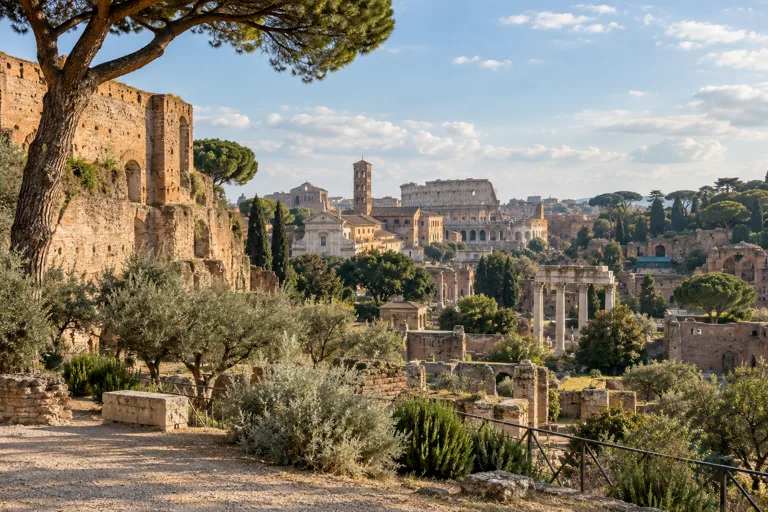
At the Villa dei Quintili, scale is part of the encounter. You are not entering a compact furnished house with a room-by-room domestic story. You are exploring a substantial archaeological landscape, where tall fragments and low walls need to be understood together. That makes the visit rewarding, but it also changes the planning. Treat it as a separate Appian Way outing, with its own journey, admission and time outside, rather than an extra room attached to your Colosseum day.
Start with the right entrance
The official park page lists access at Via Appia Antica 251 and Via Appia Nuova 1092. Those are two different roads, not interchangeable ways of writing the same address. Decide which entrance suits your arrival and onward journey before setting off. A map pin that seems conveniently close to a bus stop may be pointing to a different side of a large site from the one you intended to use.
Check the current park directions and transport operator information for your date. Do not build a tightly timed connection on an assumed walking shortcut through the archaeological area. If your visit depends on a particular exit, ask whether it is available that day. The same applies to mobility requirements: a large outdoor site needs questions about surfaces, distances and specific routes, not only whether admission is possible in principle.
Buy for this visit, not for a familiar name
Villa dei Quintili belongs to the Parco Archeologico dell’Appia Antica. It is not an additional area included merely because you hold a Colosseum ticket. The official page distinguishes site admission, wider park options and other ticket conditions. Choose the product that actually covers the places you mean to visit, and read its validity and reservation requirements before paying. A wider ticket is useful only if its included sites and your available time fit together.
Our Appian Way planning guide helps with the broader route. The Tomb of Caecilia Metella is another distinct archaeological stop, not evidence that every monument along the road has identical access or opening arrangements. Check each intended destination rather than treating the ancient road as a single continuously open attraction.
Let the big fragments establish scale
On arrival, pause before heading straight towards the tallest remains. Look at the distance between major structures and the way smaller walls divide the ground. An impressive surviving elevation can dominate a photograph while concealing the complexity of the plan around it. Site interpretation can help you identify functions; the size of a wall alone cannot tell you whether a space was private, ceremonial or practical.
Once a room or complex has been identified by the official interpretation, try relating its surviving elements to bodily experience. Where would movement have been channelled? What is the difference between an opening and a damaged edge? Which boundaries are clear, and which require explanation? These are questions for observation, not a request to reconstruct missing roofs or invent a scene of ancient daily life from a single viewpoint.
Compare bathing architecture carefully
Large bathing remains offer an opportunity to think about water, heat and circulation, but a villa’s facilities should not be equated automatically with a vast public bath complex. Our guide to reading the Baths of Caracalla provides useful looking questions. Bring those questions here, then allow the different setting to change the answers. Similar building problems need not produce identical social uses.
Keep to the marked route and leave architectural fragments where they are. Low walls can look like convenient seats or shortcuts while still forming part of the evidence being conserved. A notebook sketch of relationships is often more useful than trying to fit every ruin into one photograph. Label any imagined completion as your own hypothesis, and distinguish it from the information supplied on site.
Give daylight and last entry their own margin
The official timetable checked on 22 October lists Tuesday to Sunday opening, with October closing at 18:30 and last entry 75 minutes earlier. November brings an earlier closing time. That unusually important last-entry margin should influence your departure from central Rome: reaching the gate before closing is not the same as reaching it before admission ends. Recheck the live timetable and any weather or operational notices close to your visit.
Bring water, comfortable footwear and suitable protection for the day’s conditions. Leave time for the return journey rather than spending every available minute on the farthest section of the site. Compare any organised option in our experience collection by its actual meeting point, transport and inclusions. For another separately planned archaeological day, Rome Tour Hub’s Ostia Antica guide offers a useful contrast in urban scale. Choose one landscape you can understand comfortably, not two you can only hurry through.
Sources & further reading
Turn a good read into a great day.
Find a highly rated Roman experience that brings these stories to life.
Explore related experiences →