Rome’s Tomb of Caecilia Metella: how did a memorial become part of a fortress?

A round Roman tomb with medieval battlements is an excellent argument against tidy historical boxes. At the Tomb of Caecilia Metella on the Appian Way, commemoration and later control of a route occupy the same physical structure. You can enjoy the strong silhouette immediately, but the more rewarding visit asks how the building’s meaning changed while much of its mass remained in place.
Begin with the name, not a complete biography
The archaeological park dates the mausoleum to roughly 30–10 BC and places it near the third mile of the ancient road. Its account identifies Caecilia Metella through family relationships recorded on the monument, while treating part of the wider family identification cautiously. An inscription gives evidence for how someone was presented publicly; it does not automatically supply a full account of her character, daily life or personal wishes.
That distinction is useful whenever a monument belongs to a person whose surviving biography is incomplete. Instead of filling the gaps with an invented story, ask what the memorial chooses to make visible. Name, scale, position and material all contribute to public remembrance. Our guide to Roman inscriptions offers a way to begin without pretending that a few recognised words solve every historical question.
Separate the cylinder from its later purpose
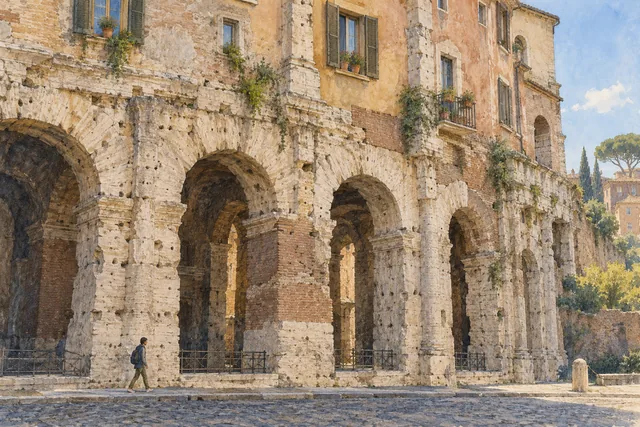
The park describes a travertine-faced cylindrical structure above a square base, later incorporated into the Caetani fortified complex in the early fourteenth century. The surrounding medieval settlement included a palace and a church. Those elements help explain why the tomb should not be read as an isolated ancient object with a decorative medieval hat. It became part of a different arrangement of buildings, movement and authority.
Try looking first at the broad geometry. Where does the curve dominate, and where do straight walls interrupt it? Then consider scale: a structure created to remain conspicuous could also be useful to people seeking a strong, visible position. That is an interpretation of the relationship between form and reuse, not proof that every later alteration had a single purpose. Let the site’s explanatory material guide more detailed conclusions.
Make a material comparison, not a guessing competition
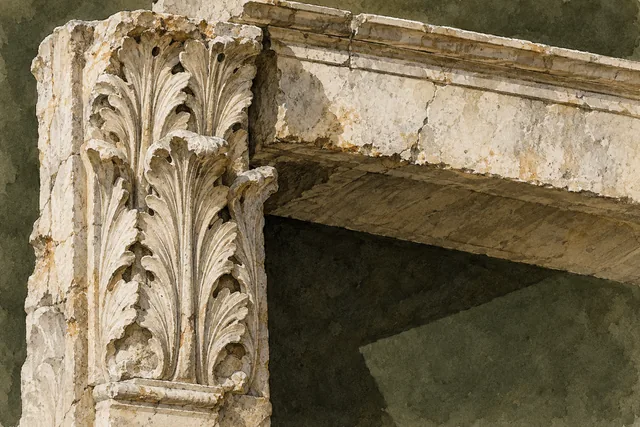
Stone facing, exposed structural material and later masonry can encourage close looking. Pick one change that is easy to see from the permitted route. Describe its colour, texture or pattern before assigning a date. Our Roman materials introduction helps with that vocabulary, while reminding you that weathering alone is a poor clock.
A useful companion exercise is to choose the detail that most clearly suggests a change of use. Compare answers, then consult a panel. If the panel contradicts your guess, the exercise has worked: observation has led to a better question. Avoid climbing on masonry, moving loose material or stepping away from the public route for a photograph. Evidence is more valuable in its context than as a souvenir.
Give the Appian Way its own time
This is a separate outing from the Colosseum and Forum. Do not assume that admission to one archaeological institution includes another, or that a guided product with “ancient Rome” in its title reaches this monument. Check the Appia Antica park’s current ticket, opening and access information for the exact day. Any combined ticket has conditions about sites and validity that deserve reading before purchase.
Use our Appian Way half-day guide to think about the wider route. Allow for the transfer, walking surface, weather and the return journey. A comfortable schedule can focus on a small number of places rather than trying to turn an entire archaeological landscape into a checklist. Bring appropriate footwear and water, and make your last transport option a known part of the plan.
Keep memorials, museums and modern feelings distinct
Ancient funerary architecture can feel surprisingly personal, but there is no need to make it sentimental. You can respect an individual memorial while examining how status and family presentation shaped it. For a different period and a living place of remembrance, Rome Tour Hub’s Non-Catholic Cemetery guide explores visitor conduct. The comparison concerns ways of looking and behaving, not an assertion that the two places had identical meanings.
Our archaeology and walking experiences can help if you prefer an interpreted outing; verify the named stops, departure point and transport inclusions. At Caecilia Metella, the central pleasure is simpler than a perfect itinerary. Follow one building across a change of purpose, and the Appian landscape becomes more than a row of ancient remains. It becomes evidence of successive communities making use of what earlier people left behind.
Sources & further reading
Turn a good read into a great day.
Find a highly rated Roman experience that brings these stories to life.
Explore related experiences →