How can you read Roman inscriptions without knowing Latin?
A Roman inscription can look like a conversation that everyone else understands. Capital letters march across stone, several words seem to have lost their vowels, and an explanatory label may be longer than the surviving text. You do not need to translate every line to begin enjoying it. Start with three questions: who wanted this message seen, where did it belong, and what has happened to its surface? Those questions turn a puzzling object into evidence about the people who used a building.
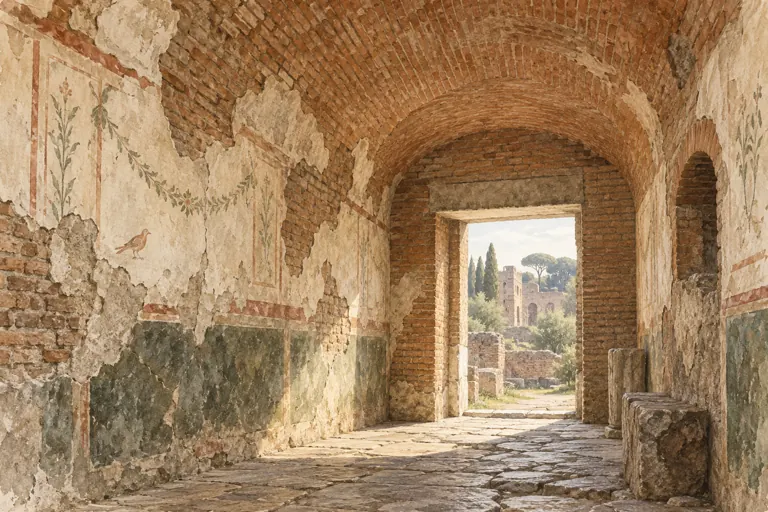
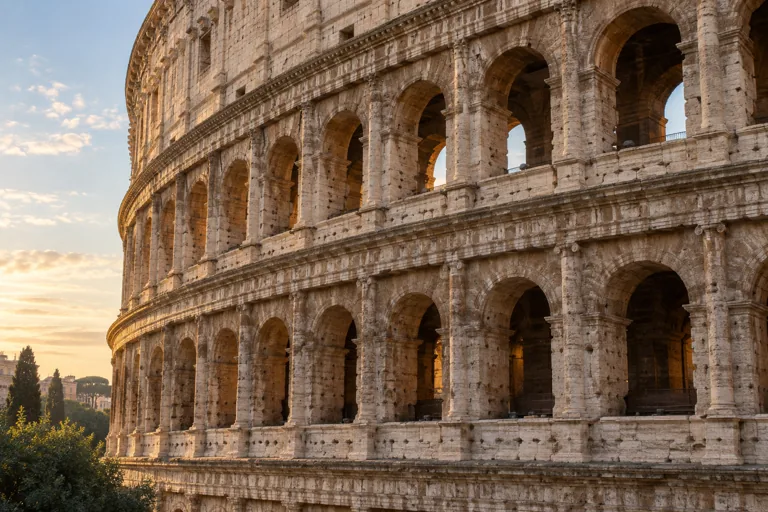
Around the Colosseum, inscriptions also interrupt the idea that ancient Rome belongs to one neat moment. Construction, repair, reuse and modern conservation can all leave different marks. Our history of the Colosseum’s changing life provides the larger frame. The exercise here is smaller: give one surviving piece of writing the attention you might normally give an entire monument.
Begin with the object before the words
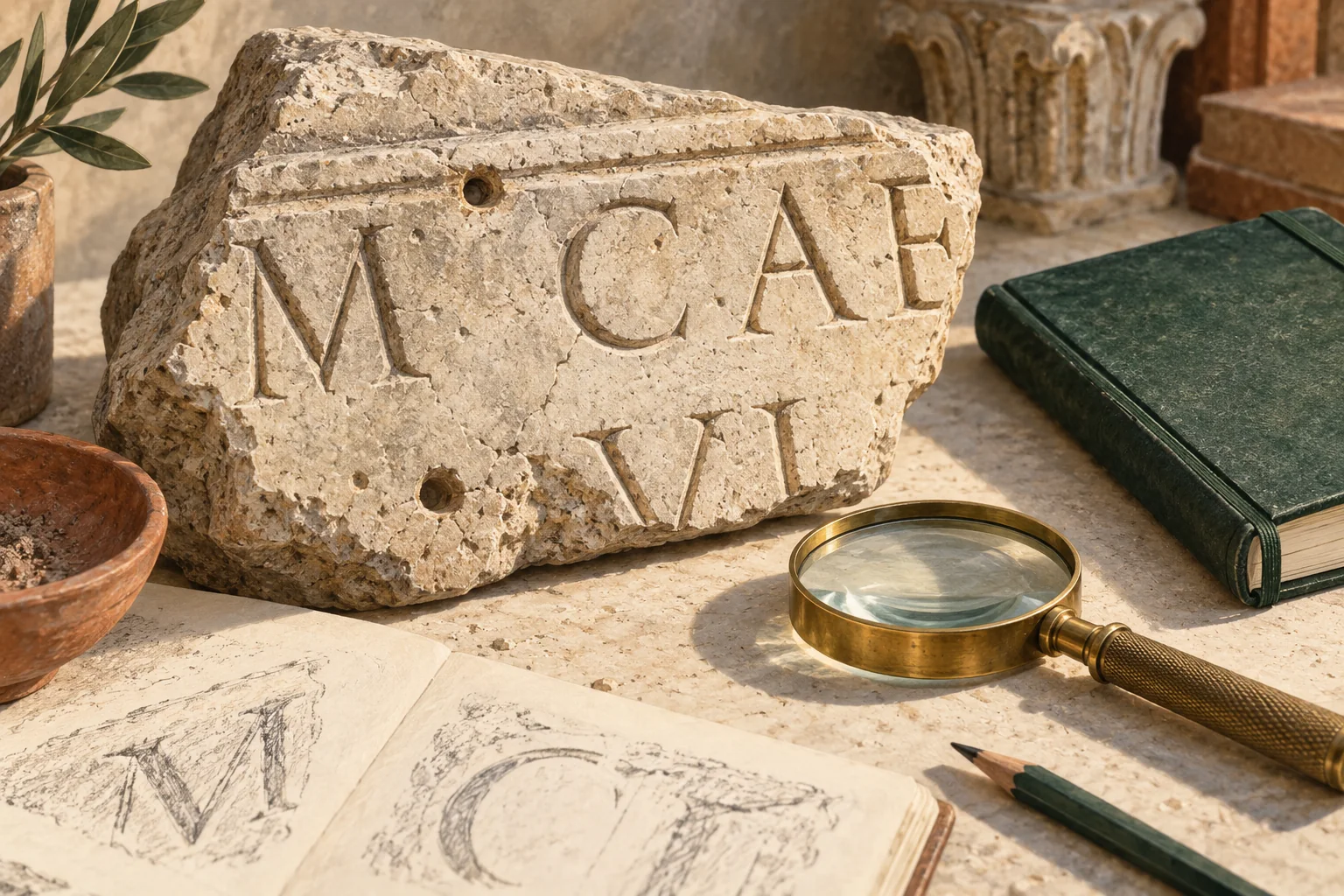
Look at the size of the stone and the space around the letters. Is the text arranged as a compact panel or stretched across an architectural element? Are all the lines equally large? Can you see a border, a broken edge, a change of surface or a repair? Describe only what is visible before deciding what caused it. A hole may invite a story, but its position and context matter; a mark is not automatically evidence for the most dramatic explanation.
This is observation rather than a test. You could jot down “large first line, smaller lower lines, break through the last word.” Then read the museum label and see which observations help. Never trace letters with your fingers, make a rubbing or move closer than the visitor barrier allows. A phone photograph, where permitted, is useful for comparing the overall layout with a detail later.
Let the Lampadius inscription complicate the story
The Park’s record of the Lampadius inscription offers a striking example. Fragments discovered in 1812 preserve a text commemorating repairs after the earthquake of 443, associated with the prefect Rufius Caecina Felix Lampadius. The same stone also retained traces of an earlier building inscription, including attachment holes for metal letters. Scholars used those traces to investigate the earlier text. The important visitor lesson is that the most easily readable message need not be the object’s first message.
Notice the distinction between seeing a hole and reconstructing an inscription. The first is available to an attentive visitor; the second depends on specialist comparison and argument. A responsible label helps you cross that distance without pretending it disappears. When an interpretation is reconstructed, keep that qualification in your own account of what you have seen.
Read the label in a useful order
First find the object’s identification and date. Next look for its original location or purpose, then the translation. Only afterwards return to the Latin. This order gives you a subject to look for instead of asking you to decipher a blank wall of unfamiliar words. Names, repeated letter groups and line breaks become easier to notice once you know what the message is doing.
Avoid treating every capital letter as the start of a separate word, or every unfamiliar sequence as a personal name. Abbreviations need their own explanation. If the label supplies an expanded text, compare one short section with the original rather than trying to master the entire inscription. A single securely understood detail is more satisfying than five confident guesses. Children can take a different role: spot the biggest letters, count lines or find a visible break.
Keep the writing connected to its setting
An inscription removed into a museum becomes easier to inspect, but its original audience can be harder to imagine. Ask how high it stood, whether viewers passed quickly or gathered nearby, and whether the building itself reinforced the message. These are useful questions even when the available label cannot answer all of them. The Park’s southern-ambulacra conservation account, for example, shows how lost architectural elements and surviving traces are studied together.
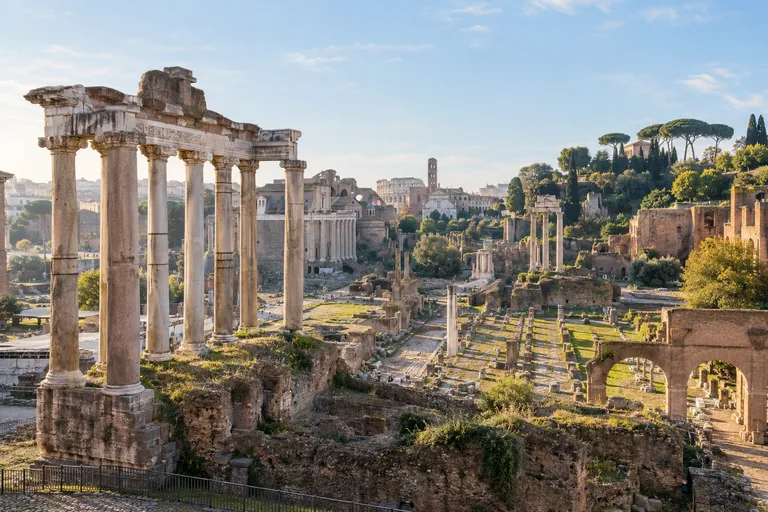
Try the same habit at the Arch of Constantine, then use our Roman Forum introduction to keep buildings and their purposes distinct. Do not assume that a particular inscription is included in every ticket or guided route; check the current itinerary and official access information.
Build a visit around one good question
If you want help connecting fragments to the surrounding monuments, compare the history experiences and look for an itinerary whose emphasis matches your interests. Ask whether the guide discusses material evidence and later changes, rather than expecting every tour to visit the same object. Across town, Rome Tour Hub’s first-visit approach to the Capitoline Museums offers another way to practise looking slowly. You can leave without knowing Latin and still have learned to ask much better questions of a stone.
Sources & further reading
Turn a good read into a great day.
Find a highly rated Roman experience that brings these stories to life.
Explore related experiences →