The Rostra in Rome’s Forum: what can a speaking platform tell you?

A speaking platform is an invitation to think about an audience as well as a speaker. At the Rostra in Rome’s Forum, the most useful first question is not which famous quotation to imagine. It is how a raised place relates to the open space around it. Stand on the permitted visitor route, orient yourself with the site interpretation and consider what changes when public speech has a designated architectural setting.
Begin with the name and the evidence
The archaeological park’s interpretive account of the Forum describes the Rostra as a tribune decorated with ships’ rams, where orators and politicians addressed a crowd. That gives you two connected ideas: a place for speaking and a visible reference to naval power. You do not need to reconstruct an entire ceremony to understand why decoration and function belong in the same discussion.
The linked page accompanies an earlier cultural itinerary. Its historical explanation is useful, but it should not be treated as a promise that the associated event or audio programme is currently operating. For an ordinary visit, rely on today’s park information, signs and ticket details. Our Forum orientation article helps establish the larger setting before you focus on an individual monument.
Look from the audience’s side
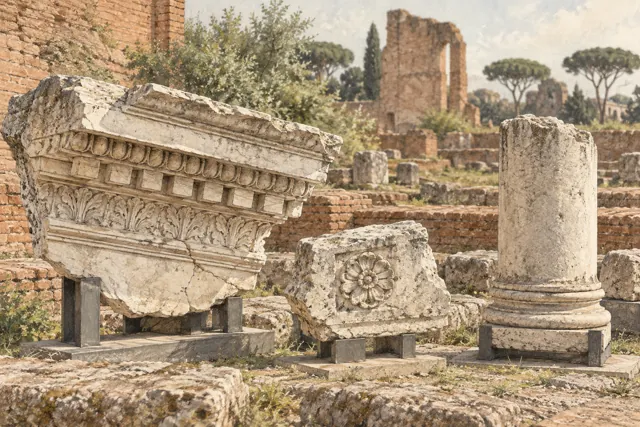
From an allowed position, notice the difference between the platform’s level and the surrounding ground. Where is the open space? Which nearby structures interrupt or frame a view? These observations can begin a discussion of visibility without claiming that today’s visitor route reproduces an ancient gathering. Modern barriers, missing structures and changed ground levels all affect the encounter.
Try describing the arrangement in plain words before reaching for a dramatic adjective. “Raised above an open area” is a more useful starting point than “the perfect stage for democracy.” The latter imports a large political claim that a platform alone cannot establish. Architecture can support public communication while leaving unanswered who had access, who was heard and how decisions were actually made.
Compare speaking with meeting
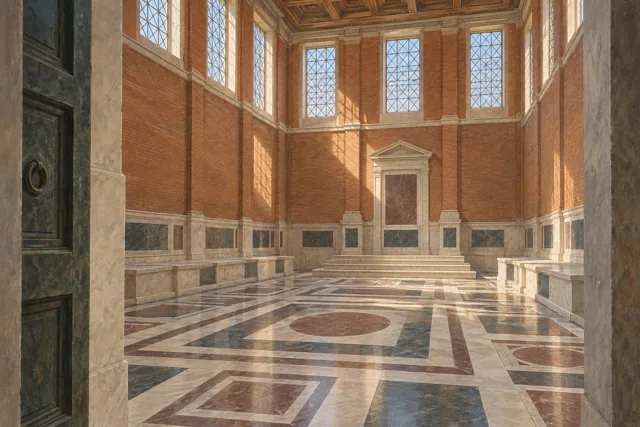
The nearby civic landscape contained different kinds of institutions and buildings. Our Curia Julia guide considers a Senate meeting hall. A hall and an outdoor speaking platform should not be flattened into one generic image of “Roman politics.” Their relationship is interesting precisely because they organize people and attention differently.
Ask what a roof, an entrance or an elevated front might change. Then separate a reasonable spatial observation from a historical conclusion requiring further evidence. A visitor can notice that a doorway controls movement; identifying the rules governing a particular meeting requires sources. This distinction keeps a short Forum stop intellectually lively without pretending that the stones answer every question.
Use ancient images with care
The park’s account of the Plutei of Trajan discusses reliefs that show monuments in the Forum, including a tribune with naval rams. Such images offer a different kind of evidence from foundations or surviving masonry. They show that buildings could form a recognizable setting within a carved narrative.
They are still composed images. Do not use a relief as if it were a modern measured panorama, with every distance and angle guaranteed. Read the official identification, notice what has been selected for representation and keep uncertain details uncertain. The page also concerns an earlier presentation; confirm current display and access rather than planning around an old event announcement.
Let neighboring monuments raise different questions
A few minutes spent with the Rostra can change how you approach the Arch of Septimius Severus. An arch communicates through its form, inscription and images; a speaking platform makes room for a person and a changing address. Both belong to public space, but they do not communicate in the same way.
For another exercise, our introduction to Roman inscriptions encourages careful attention to names and titles without guessing a translation. A monument’s modern label is a starting point for questions, not an invitation to fill every gap with a familiar story. Take one photograph of the wider relationship between structures, provided photography is permitted, rather than only collecting isolated close-ups.
Keep the visit proportionate
A focused stop need not become a long lecture. You might leave with three observations: how the platform relates to the square, how naval imagery gives it a particular identity, and how carved representations supplement surviving remains. For guided interpretation, compare the stated Forum coverage in our history experience collection; check exact access and inclusions for your date.
If your wider Rome stay includes the Capitoline Museums, carry the same questions about public images and authority into the galleries. You do not have to imagine hearing an ancient speech to make the Rostra meaningful. Learning how to distinguish place, image and interpretation is already a substantial conversation with the past.
Sources & further reading
Turn a good read into a great day.
Find a highly rated Roman experience that brings these stories to life.
Explore related experiences →