Rome’s Temple of Vespasian and Titus: what can three columns reveal?

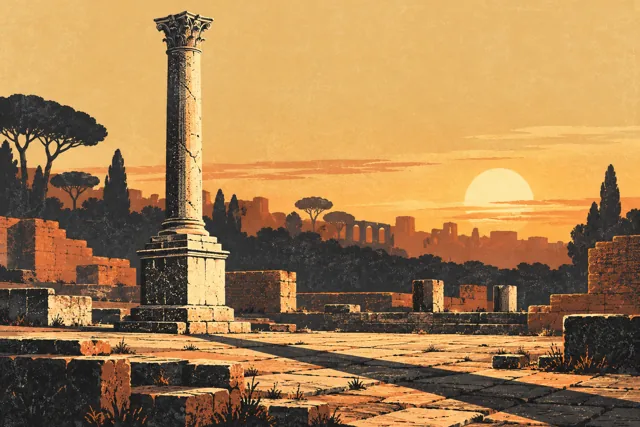
Three surviving columns can be more demanding than a nearly complete building. They give the eye something magnificent to hold, but leave the mind to supply much of the rest. At the Temple of Vespasian and Titus in Rome’s Forum, resist completing the ruin too quickly. Start with the fragment in front of you, then use the official identification and plan to ask what belongs to the original building, its later life and its modern presentation.
Identify the monument before interpreting it
The municipal Monumental Rome guide identifies the surviving corner columns, Corinthian capitals and entablature of the temple. The name refers to Vespasian and Titus, while the guide connects the expanded dedication with Domitian and records a later restoration under Septimius Severus and Caracalla. Already, the monument contains more than one historical moment.
Use the current site map and on-site interpretation to distinguish it from nearby temples. Three columns alone are not a reliable naming system: the Forum contains several memorable groups of upright remains. Confirm your position before attaching a story to a photograph. Our introduction to making sense of the Roman Forum is useful preparation for this habit of locating first and interpreting second.
Look from support to supported structure
Follow a column upward with your eyes. Notice the shaft, the transition into the capital and the horizontal architecture above. The word entablature names that upper architectural assembly; you do not need to remember every technical subdivision to see how vertical support and horizontal span work together. From a permitted viewing position, compare the outline against the sky with the surfaces where light reveals carved depth.
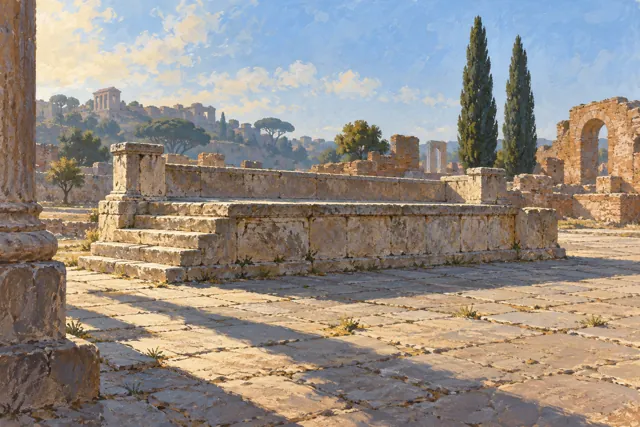
Then look at the relationship between the surviving fragment and the ground. What can you genuinely see of the raised foundation or building footprint? Which parts of your mental plan come from a diagram rather than the visible masonry? Separating those sources of information makes your understanding stronger. It does not spoil the pleasure of imagining a much larger structure.
Ask what an imperial dedication was doing here
The archaeological park’s official Forum account describes the temple among monuments commemorating deified emperors. A sacred dedication in a major civic space linked memory, authority and public visibility. The names therefore matter as more than labels for a sightseeing stop. They placed particular rulers within the Forum’s already crowded field of institutions and monuments.
That does not mean every ancient person understood the building in the same way, or that a modern viewer can recover a single universal reaction. Keep the documented purpose separate from a claim about everyone’s beliefs. The nearby Temple of Saturn offers a different combination of sacred and civic associations. Comparing functions is more revealing than treating all temples as repeated versions of one idea.
Let repair complicate the story
A restoration is part of a monument’s history, not simply an interruption of it. The official municipal guide’s record of Severan work reminds us that an imperial temple could matter to later rulers. However, the visitor should not assign every visible block or color change to that repair without evidence. Dating individual fabric requires more than a persuasive glance.
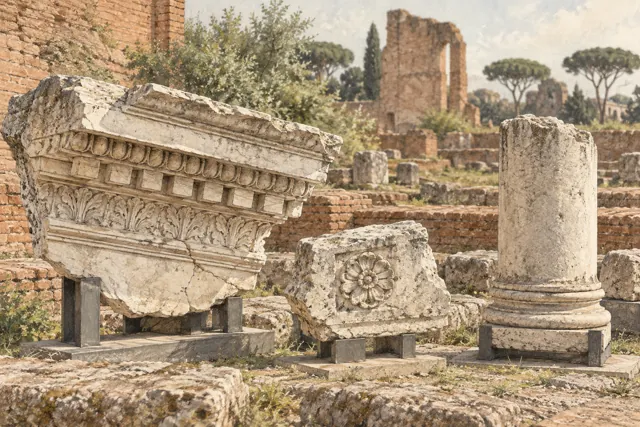
Try dividing your notes into observation and explanation. Under observation, write that a surface is rough, a joint is visible or a carving catches the light. Under explanation, record what the official interpretation actually establishes. Our guide to Roman building materials develops this distinction. It is especially helpful when a spectacular ruin tempts you to invent the missing stages of its life.
Make it a careful stop within the larger visit
Check the park’s current opening and ticket information for the admission you intend to use. A Forum visit is not a promise of unrestricted access to every monument’s platform or interior. Follow the open paths and barriers, and ask staff about a suitable route if uneven ground or steps affect your visit. A better photograph is never a reason to climb archaeological remains.
If you want a guide to connect these fragments, compare the actual route in our archaeological history experiences. A separate visit to the Capitoline Museums can extend your thinking about ancient images and their later display. Before leaving the temple, look back once without reconstructing it. Three columns, their surviving connection and the space around them are already substantial evidence; the unanswered questions are part of why they remain interesting.
Sources & further reading
Turn a good read into a great day.
Find a highly rated Roman experience that brings these stories to life.
Explore related experiences →