Rome’s Lacus Juturnae: how do you read a sacred spring in the Forum?

A Roman Forum visit can become a competition between tall monuments. The Lacus Juturnae suggests a different approach: look down, and ask why water mattered in a place so closely associated with public power. This ancient spring sanctuary offers a compact way to think about landscape, belief and the organization of the city. It rewards attention to its surroundings more than a hurried photograph of a basin.
Find the setting before the story
The archaeological park’s educational guide to the Temple of the Castors places the spring near the Temple of Castor and Pollux and the sacred area of Vesta. Start by identifying these neighbors on the current visitor map. Our introduction to making sense of the Forum can help you establish the wider geography before concentrating on this small area.
Notice how different the scale feels beside a major temple. A water source invites close attention to a specific point in the ground; a temple announces itself through height and architectural boundaries. Seeing both together is a useful reminder that religious places could take different physical forms. Avoid assuming that the most imposing ruin was always the only meaningful focus of an ancient visitor’s attention.
What does the name tell you?
The sanctuary takes its name from Juturna, a divine figure associated with springs and waters. The park’s medical-history itinerary discusses the place in relation to healing traditions. Treat this as evidence for how water could be understood in Roman religious life. It is not a recommendation to touch or drink water at the archaeological site, nor a modern claim about therapeutic effects.
That distinction lets the story remain interesting without turning it into literal reportage. A traditional account explains how people gave meaning to a place; archaeology asks what structures, objects and deposits survive. These kinds of evidence can illuminate one another, but they do not answer identical questions. You can appreciate a sacred association while still asking what dates a particular piece of masonry.
Read a basin as part of a sequence
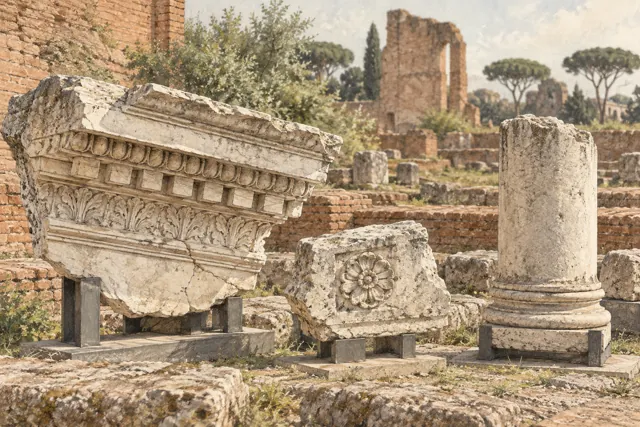
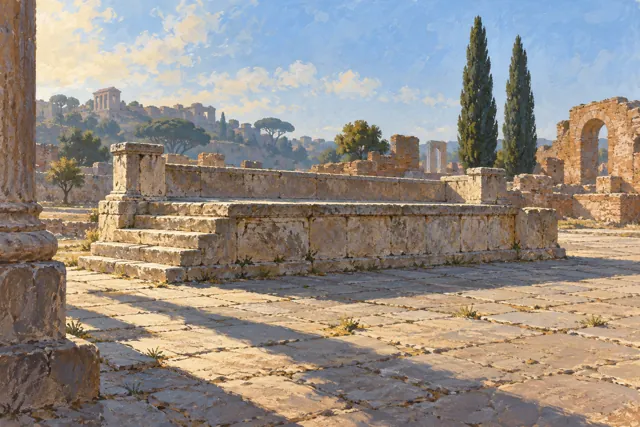
From the permitted path, look at the relationship between the basin and the surrounding ground. Which edges are clearly defined? How do changes in level affect your view? Can you distinguish the stone surface from later protective arrangements? You do not need to label each phase correctly on the spot. Simply noticing that a site has more than one layer is a productive beginning.
Use the on-site explanation to check your impressions. Weathered stone, a repaired edge and a neatly aligned block can tempt anyone into inventing a tidy construction story. Resist that shortcut. A repair may belong to ancient use, later reuse or modern conservation, and appearance alone may not settle the matter. Our House of the Vestals article explores the same discipline in a neighboring complex.
Let water change your picture of the Forum
Try a short mental exercise: imagine describing the Forum without naming a single emperor. You could begin with movement, gathering, religious practice and the places people needed to reach. Water then becomes part of the questions you ask about daily experience, rather than a decorative detail beside monumental architecture. Keep this as a way of organizing your attention, not a claim that every visible structure served the same purpose throughout antiquity.
The park’s itinerary on Egyptian connections also discusses Nile imagery found near this area. Its presence opens another question: how did images of distant landscapes enter Roman settings? It does not mean that the Forum itself looked like the Nile. For anyone who enjoyed spotting patterns, our guide to reading a Roman mosaic offers a next step.
Make a small stop count
Give yourself time to locate the spring, read the interpretation and look back toward its neighbors. Keep the walkway clear, stay behind protective boundaries and use the current park map rather than following someone across a restricted surface. If the available route changes, a guide or member of staff can explain where to look from without promising access to every edge of the monument.
Compare history experiences by their actual Forum coverage if you would like guided interpretation. A general Rome tour may spend little time on this particular sanctuary. To continue thinking about the city through water beyond the archaeological park, Rome Tour Hub’s Acqua Paola fountain article offers a deliberately different, much later example. The useful connection is a question about water and public meaning, not a claim that the two monuments had the same function.
Sources & further reading
Turn a good read into a great day.
Find a highly rated Roman experience that brings these stories to life.
Explore related experiences →