Ludus Magnus: the gladiator school beside the Colosseum
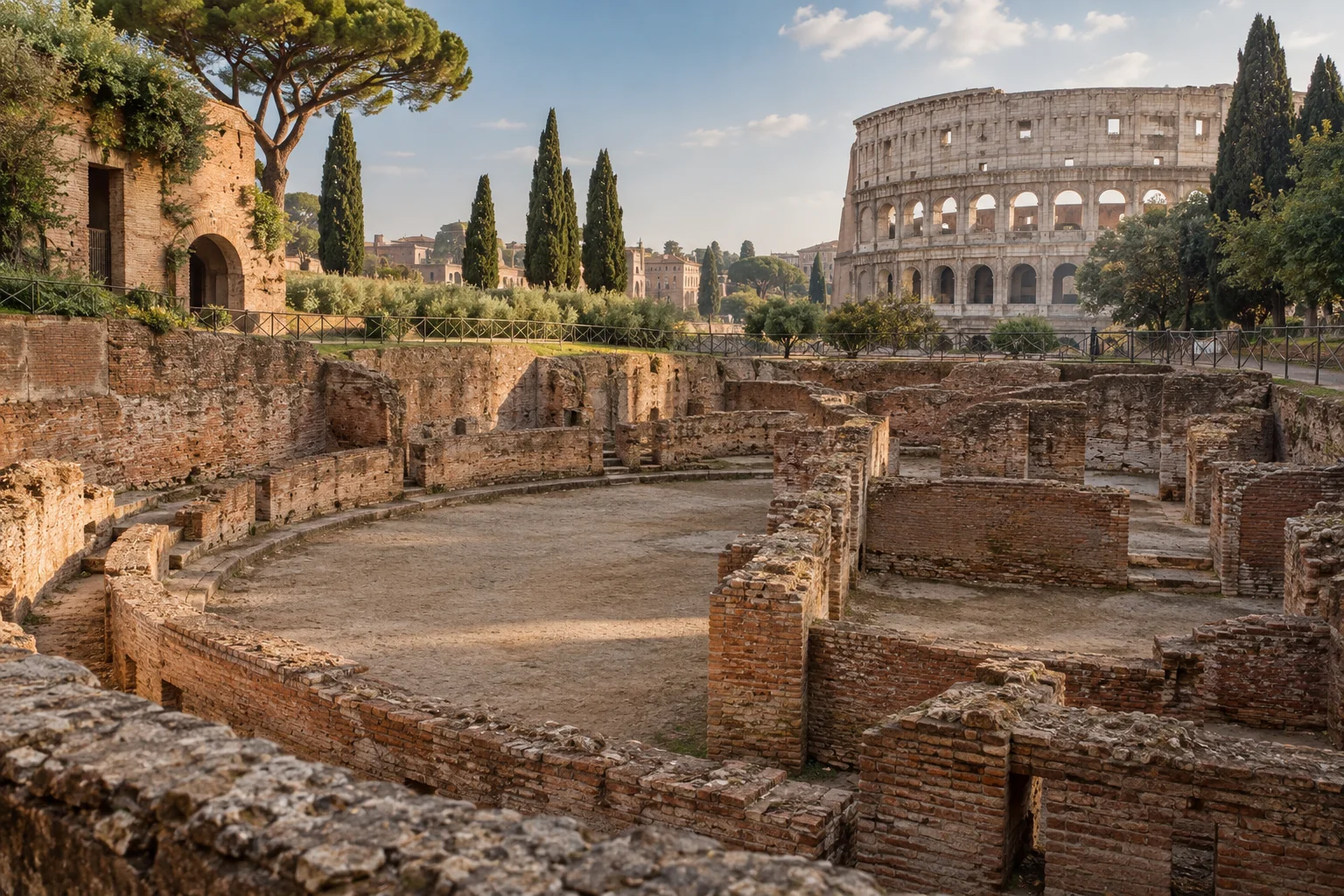
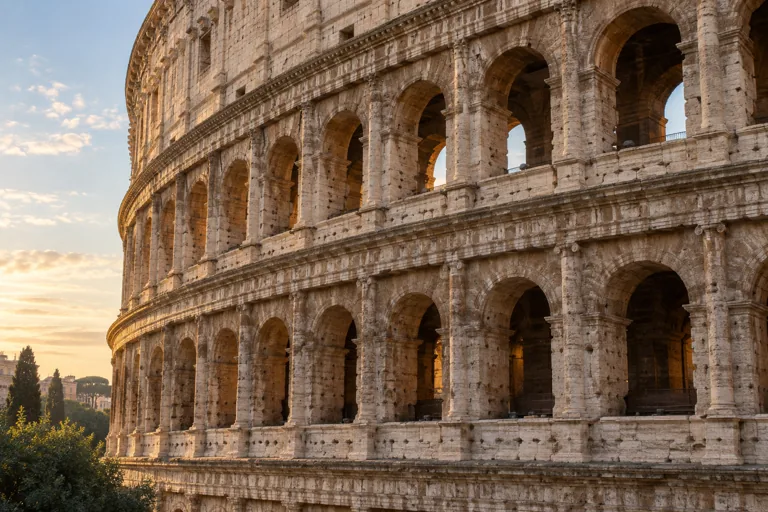
The Colosseum attracts the gaze; the Ludus Magnus asks you to look down and pay attention. Its remains sit close to the amphitheatre, and they offer a different way into the world of Roman spectacle. Instead of beginning with the audience, begin with preparation. What kind of supporting space does a great public venue require?
This is a useful stop for travelers who enjoy making connections between buildings. It can also suit a short exterior walk when you do not want another long admission visit. Work with the public viewpoints and current access arrangements available, and do not assume you can enter the archaeological remains. The interest comes from understanding the relationship, not from getting as close as possible.
What the official record tells us
The city tourism description of the Ludus Magnus identifies it as Rome's largest gladiatorial training school, built under Domitian. It describes a rectangular complex with a central courtyard and a small amphitheatre for training, connected to the Colosseum by an underground passage. Those facts provide a compact but powerful explanation of why the site belongs in the same story.
The source also records rooms arranged around the courtyard. When you look at the remains, try to distinguish the overall plan from individual details. A partial archaeological survival can be difficult to read, so use an official diagram or a guide if available. Do not expect a complete miniature Colosseum simply because a central training arena once existed here.
Think about a system of places
A major spectacle does not begin at the moment the crowd sits down. It requires preparation, movement, coordination, and supporting spaces. The Ludus Magnus helps shift your attention from a famous standalone landmark to a connected urban system. That is the central insight to carry away, even if you cannot identify every surviving wall.
Ask how proximity might matter. A neighboring training complex suggests a practical relationship with the main venue. Then separate that general observation from specific claims about daily routines. Exact stories about who stood where, how a particular person felt, or what happened on an ordinary morning need evidence. A thoughtful guide should make that distinction clear.
Keep people in the story
Gladiators often reach us as symbols: bravery, danger, entertainment, rebellion. A historical visit benefits from remembering that labels can hide very different individual circumstances. Avoid assuming a single life story for everyone associated with the school. Questions about status, training, work, and the organization of spectacle are more useful than treating every person as a character from the same film.
This does not require making the visit solemn at every moment. It means allowing curiosity and care to coexist. You can admire the complexity of an ancient system while recognizing that public entertainment involved real bodies and unequal power. The contrast is part of what makes Roman history challenging and worth studying.
Use a simple looking exercise
First, find the large shapes: straight walls, curved elements, and repeated room divisions where visible. Second, look toward the Colosseum and consider the distance between the two sites. Third, choose one thing you can confidently describe and one thing you would need help interpreting. That distinction is a surprisingly effective introduction to archaeological reasoning.
If you have children with you, ask them to design the support spaces for a modern performance venue, then compare the kinds of needs they propose. Keep the comparison general; a modern backstage is not historically identical to a Roman training complex. Our family visit guide offers more ways to make observation engaging without inventing facts.
Connect this stop to the rest of your day
The Ludus Magnus pairs well with our Colosseum introduction and a walk toward San Clemente, if you have time and the relevant sites are open. You can build a compact afternoon around different kinds of evidence: a monumental public venue, a supporting complex, and a place where successive layers of the city can be explored.
Browse history experiences if you would like interpretation along the way. Check that the itinerary actually discusses the school rather than merely passing nearby. The most valuable addition to your visit is a new question: when we admire a celebrated building, what people and places have we left outside the frame?
Sources & further reading
Turn a good read into a great day.
Find a highly rated Roman experience that brings these stories to life.
Explore related experiences →