Why does Rome have so many layers? Start at San Clemente
Rome's layers are easier to understand when you can encounter them in one place. San Clemente offers that opportunity near the Colosseum: a present church, an earlier basilica below, and older structures farther down. The effect can feel like moving through chapters of a city, although the historical process was much less tidy than a book with evenly spaced pages.
The useful question is not simply, “Why is everything buried?” It is, “What decisions and events caused people to build, fill, reuse, abandon, or rediscover this particular place?” San Clemente makes that question concrete. Plan it as a distinct visit with its own admission arrangements, rather than assuming the nearby Colosseum ticket includes access.
Begin with the building above ground
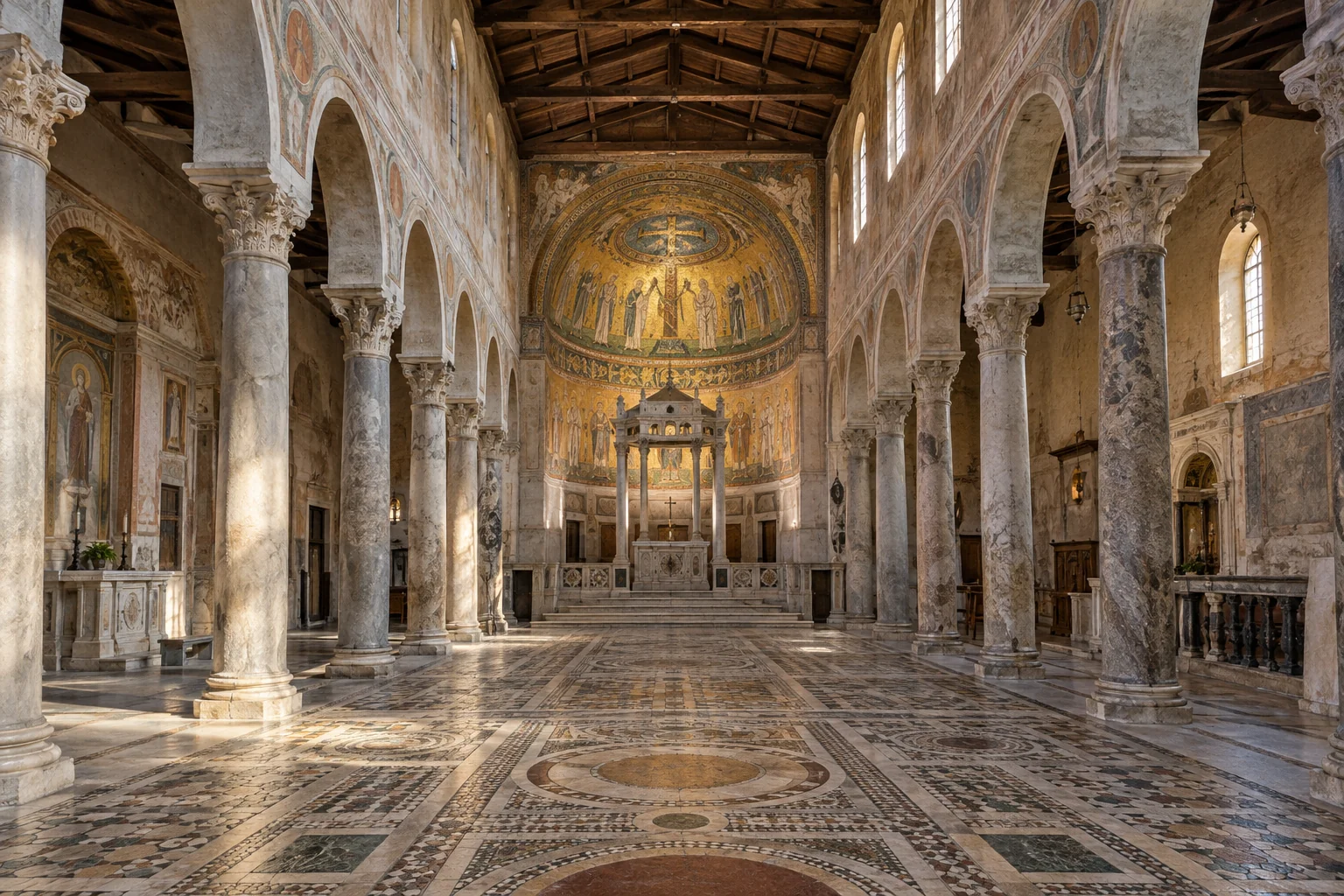
Before descending anywhere, give the upper basilica your attention. The basilica's official introduction identifies the present church as twelfth-century and highlights its mosaic, floor, and furnishings. Look at the space as a functioning whole. The upper level is not merely a lobby for more interesting archaeology below; it has its own visual and religious life.
Choose one feature to study slowly. How does decoration direct your gaze? How do the floor, columns, and apse organize the interior? You do not need to interpret every symbol immediately. Observe first, then use an official guide or explanation to connect what you notice with the history. In a place of worship, preserve a considerate volume and follow posted guidance.
Understand the sequence without oversimplifying it
The official history describes the discovery in the nineteenth century of the earlier basilica beneath the present church, followed by deeper investigation of ancient structures. The sequence demonstrates that a familiar building can conceal a history that later generations no longer fully remember. Archaeological work changes what a city knows about itself.
Do not picture each layer as a perfectly preserved floor of a historical department store. Buildings are altered, materials move, and later work cuts across earlier arrangements. What you can visit is a carefully interpreted survival, not a complete sample of every century. Asking how a feature was identified is often more illuminating than simply asking how old it is.
Think about reuse as a practical decision
When looking at successive structures, consider the practical choices involved in building in an already occupied place. Existing walls and foundations may influence later plans; changes in ground level alter the relationship between entrances, streets, and interiors. The exact story differs from site to site, so San Clemente should be an example that sharpens your questions rather than a universal explanation for all Rome.
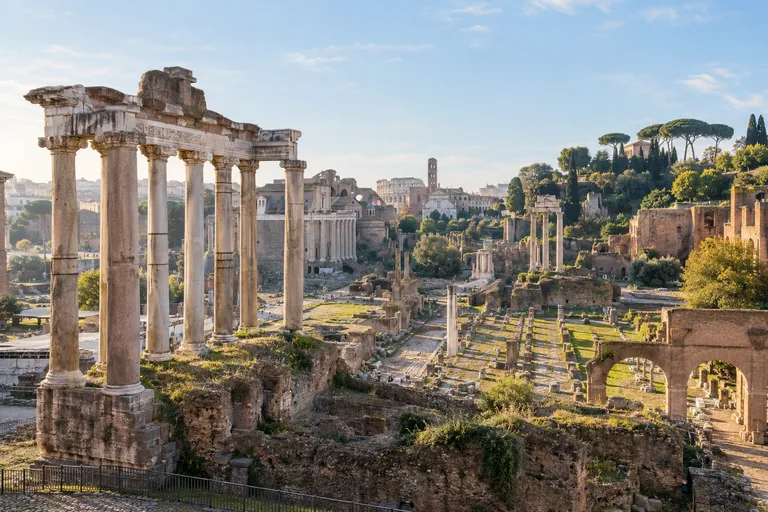
This way of thinking also improves an outdoor archaeology visit. In our Forum guide, we suggest asking whether neighboring remains belong to the same moment. At San Clemente, a similar habit helps you separate the visible arrangement from the historical sequence. A city develops through actions, not through the passive accumulation of dates.
Plan for a focused, respectful visit
Check the basilica's current visitor information for the upper church and excavations. Verify ticketing, access conditions, photography rules, and opening arrangements before arrival. If steps, enclosed spaces, or low light are concerns, contact the venue for information relevant to your needs. Do not infer accessibility from the short distance between attractions.
Allow time afterward to come back into the daylight and digest what you saw. A brief note can help: write down the sequence in your own words, leaving any uncertain part marked as a question. That is a better memory aid than trying to photograph every label. You can revisit the official history later to clarify the gaps.
Pair it with one nearby idea
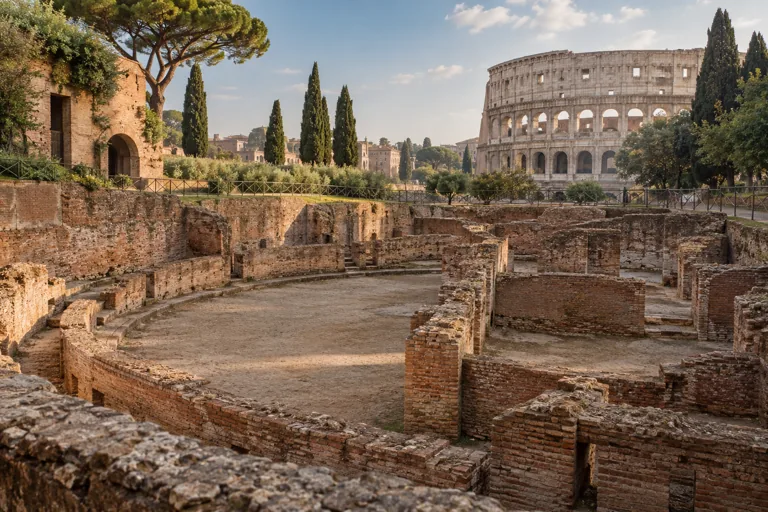
The Ludus Magnus offers a useful contrast: an archaeological plan visible in the city landscape rather than a sequence explored vertically. Alternatively, make San Clemente the one indoor focus of a short-visit itinerary. Keep the combination small enough to enjoy both places attentively.
If you choose a guided experience, look for clear references to which areas are included and how much time is spent at the basilica. The lasting reward is a new way to look at Rome. An ordinary doorway, a changed pavement level, or a reused wall can start to feel like a question worth asking, because you have seen how much history one place can hold.
Sources & further reading
Turn a good read into a great day.
Find a highly rated Roman experience that brings these stories to life.
Explore related experiences →