Rome’s Basilica of Maxentius: how do you read such an enormous ruin?

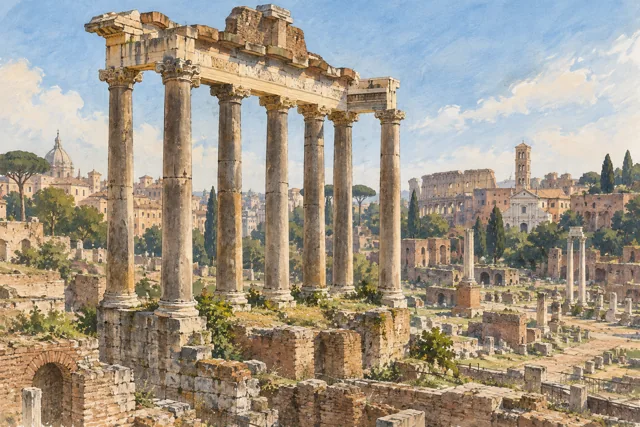
The Basilica of Maxentius can make the Roman Forum feel suddenly very small. After a succession of low walls, column fragments and outlines in the ground, its surviving vaults rise like an enormous architectural interruption. The most useful first question is surprisingly simple: are you looking at the whole building, or at one surviving piece of something larger? Answering that changes the monument from an impressive backdrop into a readable space.
Give it a deliberate pause during your Forum visit. You do not need to memorize an emperor list or reconstruct every vanished wall. Begin with three things you can compare: the surviving roof forms, the openings between spaces and the size of a person beneath them. Our introduction to reading the Roman Forum offers the wider framework for that kind of close looking.
Understand what survived
The archaeological park’s official description identifies the surviving structure as the northern aisle of a three-aisled building. Maxentius began construction in 308, and Constantine completed it with alterations. The central space once had great cross vaults; the side aisles were divided into compartments covered by coffered barrel vaults. In other words, those immense visible bays were part of the building’s side, not the entire central hall.
That is enough information to try a small visual exercise. Find the curved surface of a surviving vault, then follow its edge down toward the supporting masonry. Look across to the next compartment and notice the repetition. A floor plan on an official interpretation panel can help connect those shapes, but keep your eyes moving between the diagram and the actual structure. Plans explain relationships; the ruin supplies the bodily sense of scale.
A civic hall with an imperial presence
Here, basilica means a civic building rather than a Christian church. Rome’s official tourism service explains a scholarly identification of the complex with the Urban Prefecture and a proposed fourth-century transfer here of the tribunal for cases involving senators. These are interpretations of its administrative and judicial use, not evidence for every activity in every room. The distinction helps make sense of a vast public hall built to express authority.
The same source connects the basilica with the colossal statue fragments now at the Capitoline Museums: a monumental imperial image stood within the building. Consider how the scale of a ruler’s image would have interacted with the scale of the hall. Architecture and representation could reinforce each other. That is a more useful starting point than imagining an empty vaulted shell as the complete ancient experience.
Our guide to the Colosseum’s missing southern corridors uses a similar habit of looking. The structures had different purposes, so the comparison is about method rather than function. At both places, mentally completing everything too quickly can make you overlook the evidence that actually remains. An incomplete view can be more informative than a perfectly tidy imagined reconstruction.
Look closely after looking up
Once the scale has registered, choose one smaller feature. The recessed panels within the vaults make a good starting point. Observe their sequence, depth and relationship to the larger curve. You can ask how decoration changes the way a massive surface feels without needing to identify every technical detail. Take one wide photograph, if permitted, and then one detail that explains what caught your attention.
Recent conservation is also part of the monument’s story. The park’s account of the basilica’s return after restoration describes a long program of work before its 2025 reopening. That historical announcement is not a promise about today’s visitor route or an event ticket. Check current park information for access; use the restoration history to remember that the survival of an ancient building depends on continuing care.
Build a visit around one good question
If you are visiting with children, ask everyone to choose the feature that best communicates size, then compare answers. Adults may choose a vault; a child may choose a doorway or a tiny distant visitor. Both can be useful. Stay on authorized paths, avoid blocking narrow passages for photographs and take a rest before tiredness turns every subsequent monument into another name on a list.
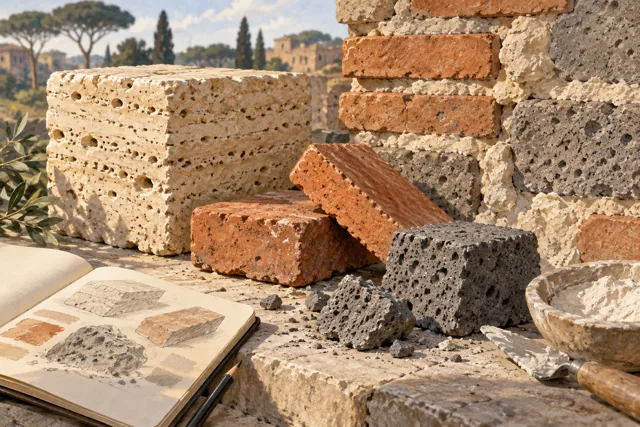
For a guided visit, browse archaeological walking tours and check the actual route, meeting point and included areas. A Forum mention does not guarantee a detailed stop here. Pair your preparation with our guide to Roman building materials. If your curiosity continues beyond the archaeological park, Rome Tour Hub’s Capitoline Museums guide offers another setting for thinking about ancient scale, fragments and display. Leave the basilica with one observation you can explain, rather than ten facts you have already forgotten.
Sources & further reading
Turn a good read into a great day.
Find a highly rated Roman experience that brings these stories to life.
Explore related experiences →