Photographing the Colosseum: a thoughtful evening walk
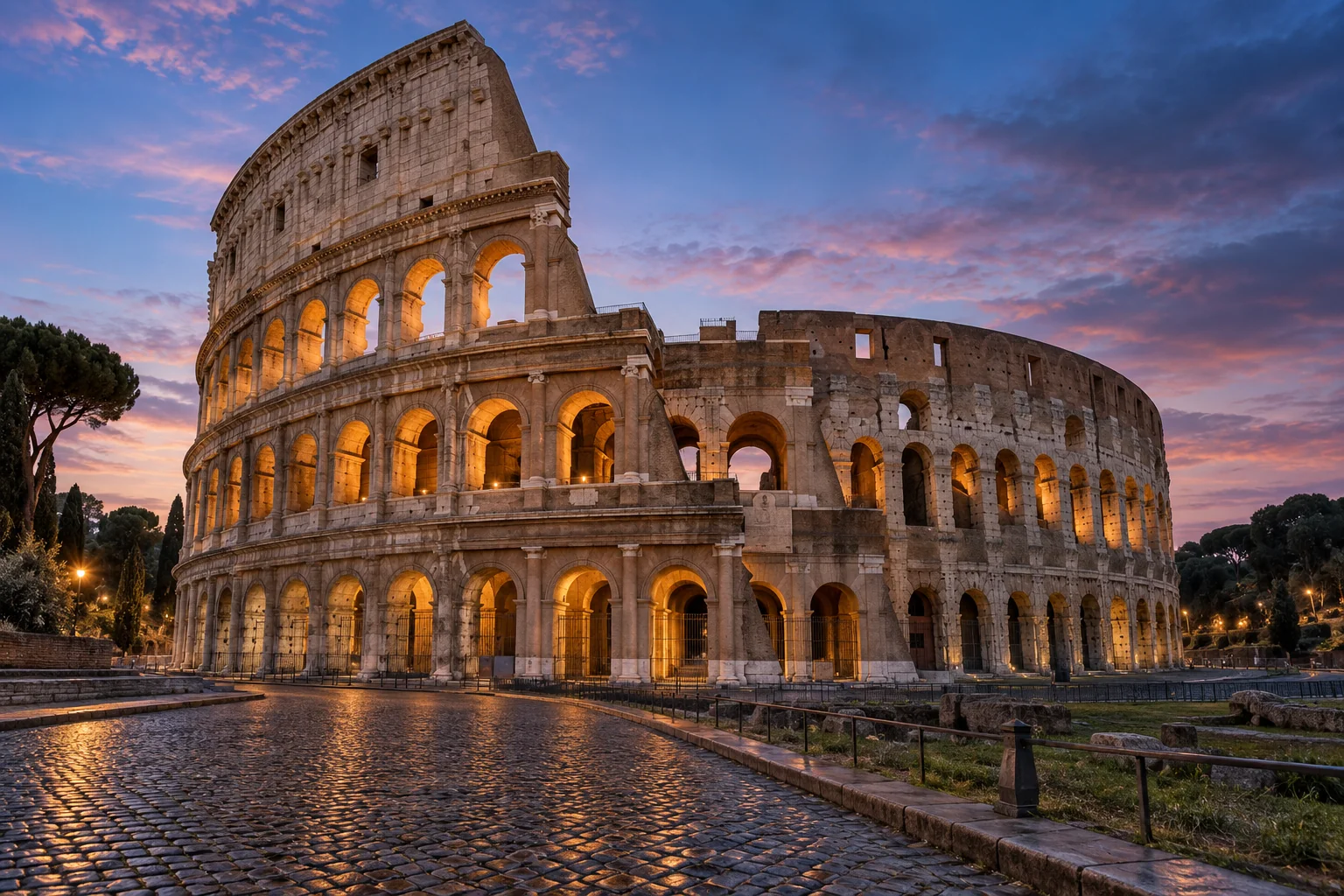
The Colosseum is already recognizable. Your photograph does not need to prove that you found it. A more interesting aim is to show what caught your attention: the rhythm of the arches, a change in the sky, the curve against the street, or the way the building feels at a particular moment. Begin by looking, then decide what belongs in the frame.
An evening walk can be a pleasant setting for this exercise, but light and weather are variable. Check the local sunset time for your date if it matters to your plan, and do not assume a particular viewpoint will be empty. This guide is about working with the conditions you find, using public pedestrian spaces and respecting current barriers and restrictions.
Start with one wide view
Take a picture that establishes the whole building, then pause. What does the image tell you, and what does it leave out? If the answer is simply “large famous monument,” try changing the relationship between the Colosseum and its surroundings. Include some context only when it contributes to your idea, rather than because the widest setting happens to be available.
With a phone, move carefully instead of relying immediately on heavy digital zoom. Check the edges of the frame for distractions and hold the device steady. You do not need professional equipment to improve a composition. A clear intention, a safe position, and a little patience often matter more than another lens or accessory.
Make a detail photograph
Choose a repeated feature, a material contrast, or a change in the surviving outline. A detail invites a different kind of attention from the full landmark. It can also become a more personal memory because you had to choose it deliberately. Keep your interpretation modest: visual differences may prompt historical questions without allowing you to date every surface by sight.
Our Colosseum history introduction suggests looking for evidence of change. You can translate that idea into a pair of photographs: one showing the overall structure and another concentrating on an interruption or connection. Later, use an official explanation or guide to understand what you noticed.
Let people remain people
Crowds are part of visiting a famous city, not a failure in your picture. You can wait for a clearer view where safe, change your framing, or accept human scale as part of the scene. Avoid treating strangers as props, especially when photographing them closely. Ask permission when appropriate and be considerate around children and private moments.
Do not step into traffic, climb barriers, block entrances, or occupy a narrow route to secure an angle. A photograph is not improved by the inconvenience imposed on everyone around it. For equipment or activity beyond ordinary casual photography, check the relevant rules and permissions; a public-looking setting does not establish unrestricted use.
Add a second subject nearby
The Arch of Constantine gives you another subject with a different shape and visual rhythm. Our short looking guide can help you choose a detail instead of merely collecting a second landmark. Compare what happens when you photograph an arch as a complete object and when you concentrate on one sculpted area.
If you want a broader walk, the official Aventine guide introduces viewpoints and garden spaces farther away. Treat that as a separate extension requiring route and opening checks, not as an automatic final stop after dark. Distance, slopes, gates, and your energy should decide whether it belongs in the same outing.
Finish with a small visual story
Instead of taking dozens of nearly identical images, aim for a sequence of three: the setting, a detail, and a moment that suggests the atmosphere of the walk. Review them once, make any adjustment you want while still there, then put the camera away. Seeing the place directly remains part of the experience you came to have.
Browse Walking Tours if you prefer a guided evening route, and confirm whether photography pauses fit the itinerary. For a shorter outing, use our two-hour planning guide. The most satisfying photograph may not be the most dramatic. It may be the one that reminds you how you actually spent a quiet, attentive moment beside an extraordinary building.
Sources & further reading
Turn a good read into a great day.
Find a highly rated Roman experience that brings these stories to life.
Explore related experiences →