Beyond the Colosseum: a slower walk on the Celio
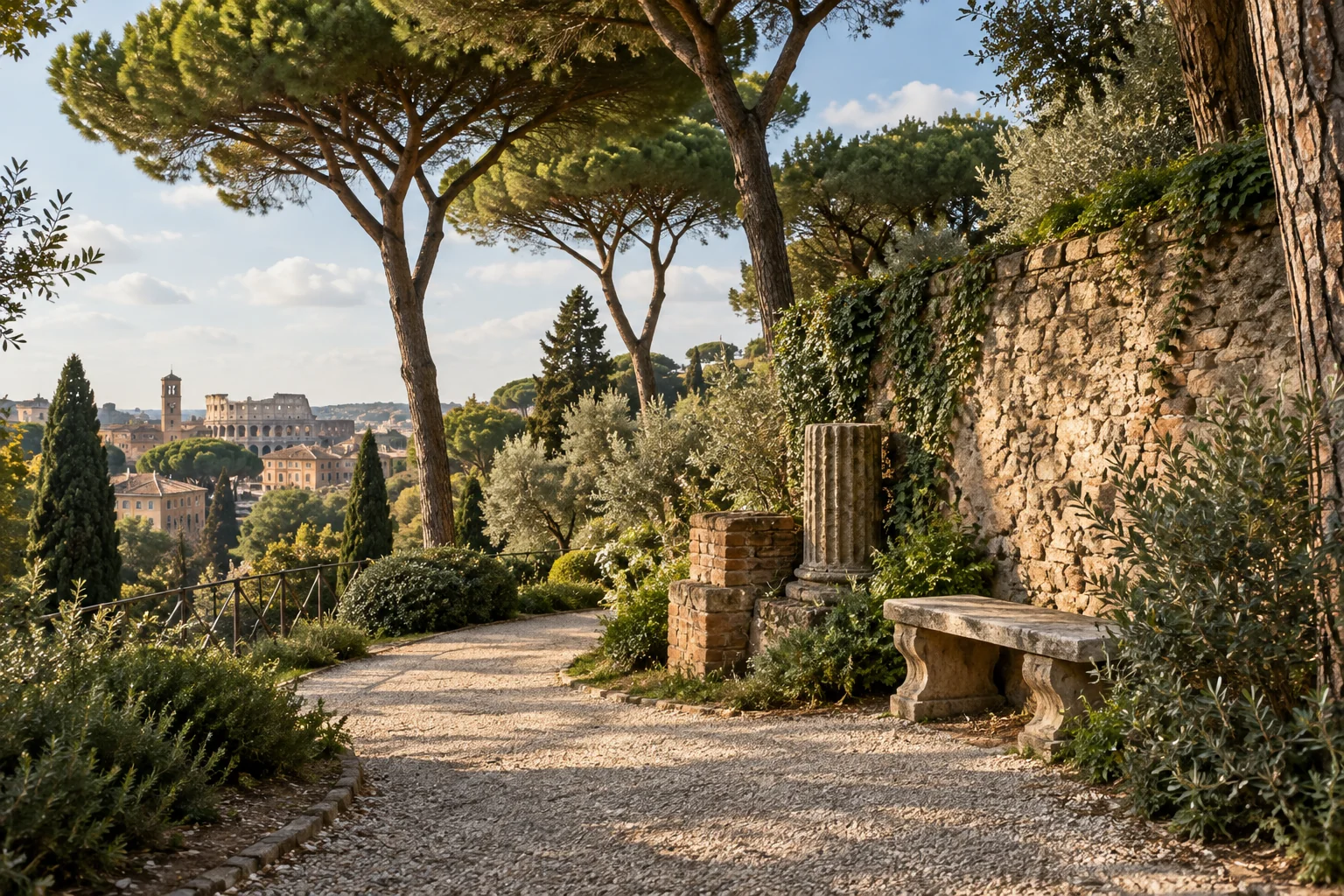
The Celio, or Caelian Hill, gives a Colosseum day another rhythm. Instead of adding a second major attraction, you can choose a walk that includes green space, a different angle on the city, and one place to investigate properly. It is a useful option when you still feel curious but no longer want an itinerary organized entirely by ticket times.
This is a framework for planning rather than a fixed turn-by-turn route. Select your stops on a current map, check their opening arrangements, and account for slopes and road crossings. A nearby hill is still a hill. If the group is tired or has particular mobility needs, shorten the walk before starting rather than hoping that enthusiasm will solve the terrain.
Give the hill a theme
Choose one idea to carry through the walk: how green spaces frame ancient remains, how different periods sit beside one another, or how the Colosseum changes when seen from another direction. A theme helps you notice things without requiring a large number of stops. It can also make a modest outing feel more coherent than a long route assembled from unrelated recommendations.
The city's Celio archaeological park page describes a green area overlooking the Colosseum and the nearby Forma Urbis museum. It is a useful starting point for choosing an archaeological focus. Check current admission and access details separately; an open park and an indoor museum need not operate under the same arrangements.
Consider the pleasure of a map
If the Forma Urbis interests you, make it your focused stop rather than an afterthought. The municipal description identifies the surviving fragments as parts of a monumental marble plan of ancient Rome. A map offers a different kind of encounter with the city from walking among buildings: it asks you to read relationships and patterns in reduced form.
Before visiting, try drawing the few places you have seen that day from memory. You will quickly discover which connections you understand and which remain vague. After looking at any historical map display, compare the act of representing a city with the experience of moving through it. The two are complementary, and neither tells the entire story.
Leave time for a garden pause
Villa Celimontana is another possible focus for the walk. The official tourism page locates it on the Celio and records its history as a villa that later became a public park. Confirm current entrances and opening times before relying on it as a rest stop. Parks can have gates, events, maintenance, and their own practical rules.
When a suitable place to sit is available, use it. A pause is not a gap in the cultural program; it helps the earlier visit settle into memory. Look back at one photograph, read a short explanation, or ask everyone what detail they found most surprising. Then put the phone away for a while and enjoy the fact that the afternoon is no longer rushing.
Make an interior visit optional
The area contains places of worship and other cultural sites, but a name on a map is not enough to guarantee access. If a particular interior matters to you, check its own visitor information and allow for services or closures. Dress and behave appropriately for the venue, and distinguish a working religious space from a conventional museum visit.
If your interest is the layered history of nearby buildings, our San Clemente guide may suggest a separate or alternative visit. Do not add it automatically. A good walk has a manageable centre of attention and an easy way to finish; a succession of “just one more” stops can undo that advantage.
Choose your return before your energy runs out
Decide whether to return toward the Colosseum, continue to a meal, or travel back to your accommodation. Check the actual distance from the last stop, not from the hill's label on a map. A restaurant reservation or tour later in the day should include room for that final transition.
Compare this approach with our Monti walk, or browse Walking Tours for guided options. The Celio does not need to be presented as a secret escape from all other visitors. Its appeal is more straightforward: a chance to change pace, connect different kinds of places, and let a day around the Colosseum become a day spent in Rome.
Sources & further reading
Turn a good read into a great day.
Find a highly rated Roman experience that brings these stories to life.
Explore related experiences →