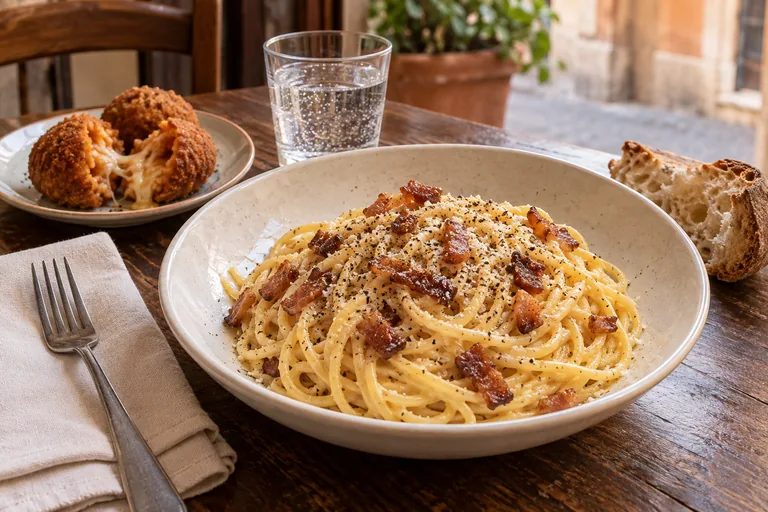
Cacio e pepe, gricia, carbonara, amatriciana: a Roman pasta field guide
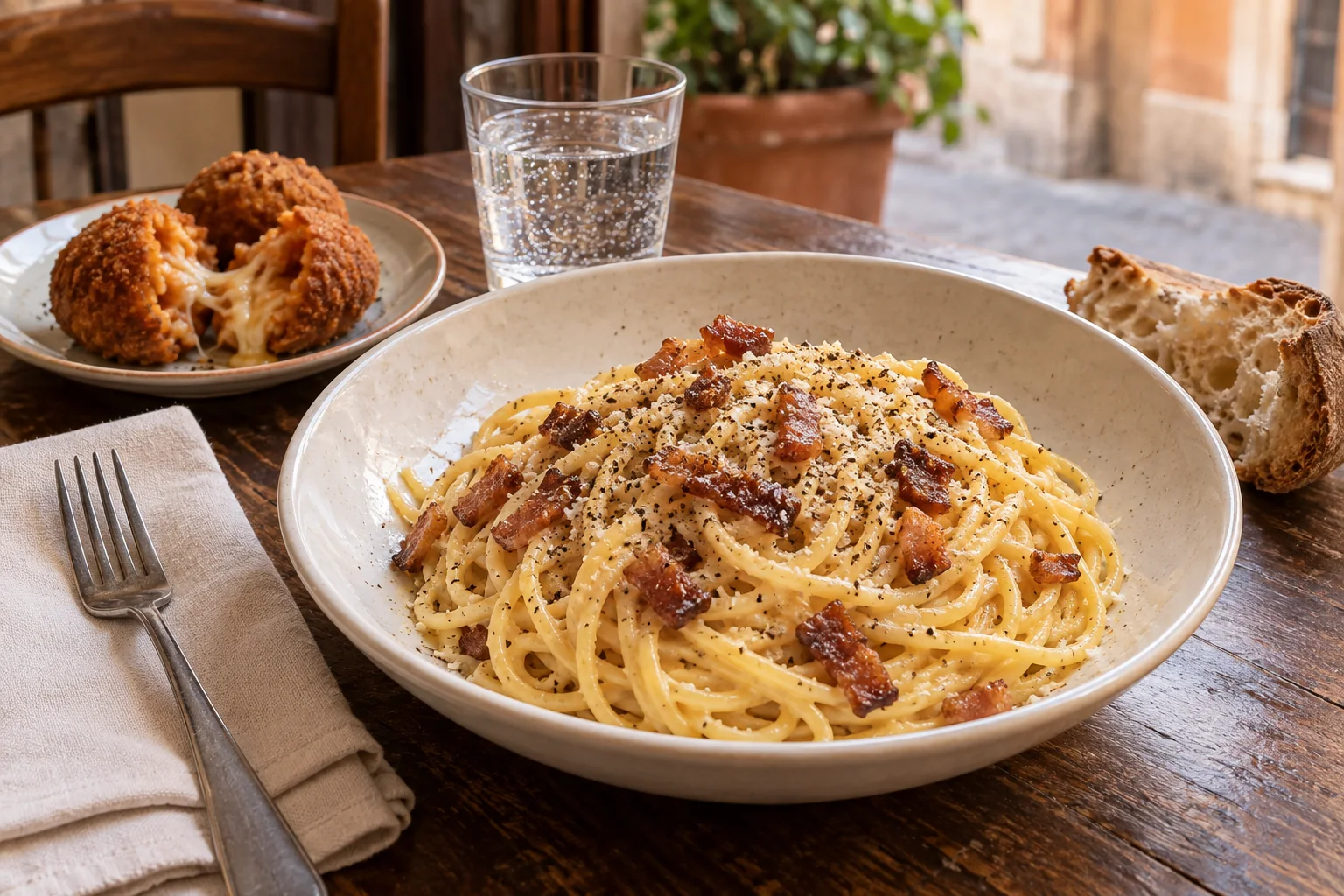
A Roman pasta menu can look wonderfully familiar and slightly puzzling at the same time. Several dishes share a family resemblance, yet a small change in ingredients produces a very different plate. Rather than ranking them, use your meal as a tasting lesson: pay attention to texture, salt, pepper, richness, and the relationship between sauce and pasta.
Recipes vary between kitchens, and food history rarely behaves as neatly as a confident origin story suggests. The descriptions here are a starting point for reading a menu, not a rulebook for policing someone's lunch. Ask the restaurant about its preparation, especially if ingredients affect a dietary requirement or allergy. The person making your meal is the best source for what is actually in it.
Cacio e pepe: notice the texture
The city's introduction to Roman dishes describes cacio e pepe through cheese and pepper. Its apparent simplicity makes it a useful place to begin. Taste slowly enough to notice how the sauce coats the pasta and how pepper changes the impression of richness. A short ingredient list does not make technique unimportant.
If two people at the table order different dishes, compare a forkful only if everyone is comfortable sharing. Do you notice the cheese first, the pepper, or the pasta itself? You are developing a vocabulary for your own preferences. There is no examination at the end, and “I would happily eat this again” is an entirely respectable conclusion.
Gricia: understand what the pork contributes
Turismo Roma's gricia guide identifies guanciale, pepper, and Pecorino Romano as the central ingredients. Guanciale is pork cheek, and its presence changes both flavor and texture. Ask how the kitchen prepares its version rather than assuming that every plate will have the same balance or shape of pasta.
Try to notice the interaction instead of separating the dish into a checklist. How does a bite with pork differ from one without? Does the sauce feel richer, sharper, or more savory than the cacio e pepe you may know? These small comparisons make a memorable meal without requiring grand claims about which restaurant has achieved perfection.
Carbonara: enjoy it without needing a tidy legend
The official tourism article on carbonara explicitly acknowledges uncertainty around its origins. That is a helpful reminder that a beloved dish can have a strong identity without one undisputed birth story. Eggs, pork, cheese, and pepper are the familiar points to discuss with the kitchen, while the details of preparation belong to the actual menu before you.
When tasting, notice how the sauce differs from the cheese-led impression of cacio e pepe and the pork-led comparison you made with gricia. Avoid turning the table into a debate about authenticity before anyone has enjoyed dinner. Food knowledge should enlarge pleasure and curiosity, not make a meal feel like a tribunal.
Amatriciana: ask about the version on the menu
Amatriciana introduces a tomato element to the family of flavors discussed here. The city's traditional cuisine overview places it among the familiar pasta dishes of the Roman table. Menus may offer different pasta shapes and preparations, so read the description and ask if the version matters to your choice.
Consider ordering it on another day rather than attempting every dish in one sitting. Repeated meals let you notice how appetite, setting, and the rest of the day influence what you enjoy. A rich lunch after a long walk can feel different from the same dish before an active afternoon. The “best” order is partly a question of timing.
Make the meal fit your visit
Use our nearby lunch guide to choose a convenient setting and leave enough time to eat comfortably. If you want more explanation, a cooking class can make technique visible, while a food walk can place individual dishes within a neighborhood. Check dietary arrangements, actual tastings, and whether the experience includes enough food for your plans.
Browse Dining experiences with those distinctions in mind, or pair a simple meal with a Monti stroll. Your most useful souvenir may be a clear memory of one plate and a better sense of what you like. Four familiar names on a menu can become four different invitations to pay attention.
A food itinerary can continue north
Treat this Roman pasta field guide as an invitation to pay attention, rather than a menu template for every city. If your itinerary continues north, our companion Florence food guide and Milanese food guide introduce two different local food traditions. Use them to choose what you would enjoy learning about, then compare the related cooking classes and guided tastings. Read what each experience includes and leave room for a different food story.
Sources & further reading
Turn a good read into a great day.
Find a highly rated Roman experience that brings these stories to life.
Explore related experiences →